Origin of Life
ENAZ

Claims and Answers

Terms C

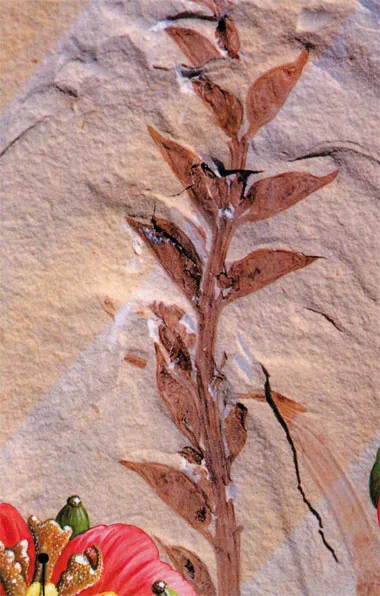
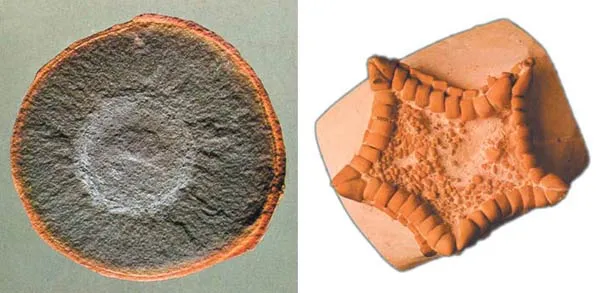
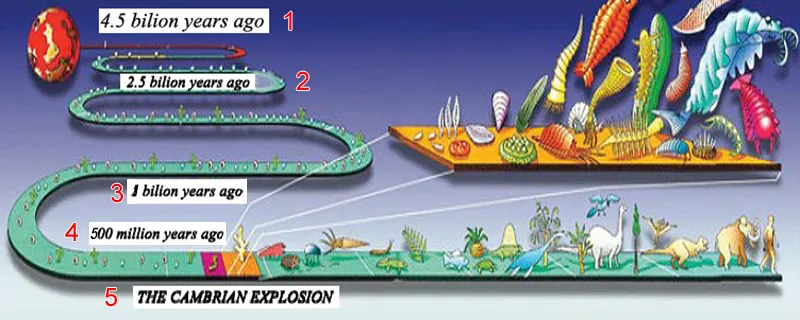
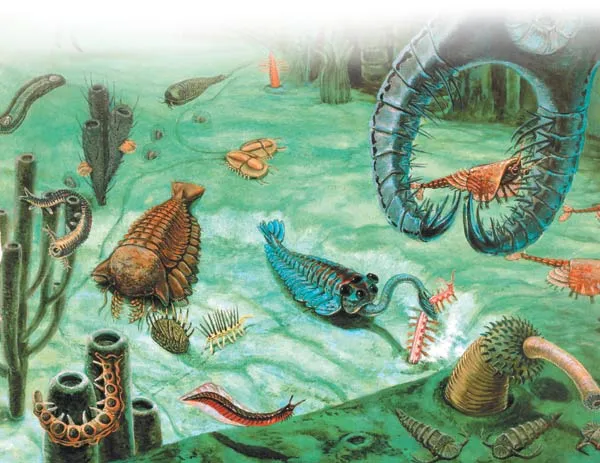
Fossils found in Cambrian rock strata belong to such complex invertebrates as snails, trilobites, sponges, worms, sea anemones, starfishes, shellfish and jellyfish. (See Trilobites.) The interesting thing is that all…
Part 1· ~2 min read

Cambrian Explosion, the

Fossils found in Cambrian rock strata belong to such complex invertebrates as snails, trilobites, sponges, worms, sea anemones, starfishes, shellfish and jellyfish. (See Trilobites.) The interesting thing is that all…
Part 2· ~1 min read

Indeed, Darwin had written that

If numerous species, belonging to the same genera or families, have really started into life all at once, the fact would be fatal to the theory of descent with slow modification through natural selection. 67

Part 3· ~1 min read

Cambrian Period, the

The Cambrian Period is a geological age that began some 520 million years ago and is estimated to have lasted 10 million years. Apart from single-celled organisms and a few simple multi-celled organisms, no traces of…

Part 4· ~4 min read

Carbon-14 testing

Carbon-14 is one form of radiometric test, but one very important feature distinguishes it from the others. Other radiometric tests can be used only in determining the ages of volcanic rocks. Carbon-14 dating,…

Part 5· ~3 min read

Carbon-based life

The theory of evolution, maintaining that all living things evolved by chance from a common ancestor, makes frequent use of the concept of adaptation. Evolutionists claim that by adapting to their environments,…

Part 7· ~6 min read

Cell

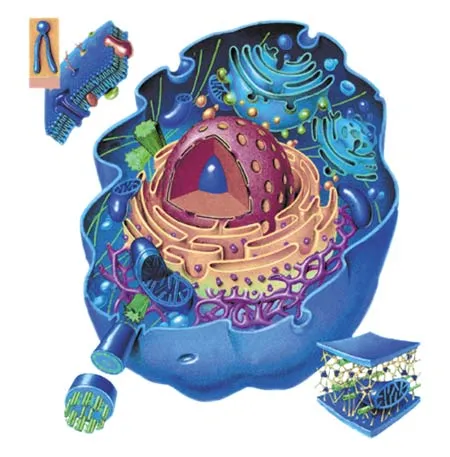
The complex structure of the cell was unknown in Darwin’s time. For that reason, evolutionists of the day believed that it was perfectly reasonable to answer the question of “How did life emerge?” by saying “Through…

Part 8· ~1 min read

Chemical Evolution Deception, the

Evolutionists refer to all the claims regarding the synthesis of the amino acids that gave rise to life in the supposedly primitive atmospheric conditions are as chemical evolution . (See Primordial soup fantasy ,…

Part 9· ~1 min read

Chromosomes

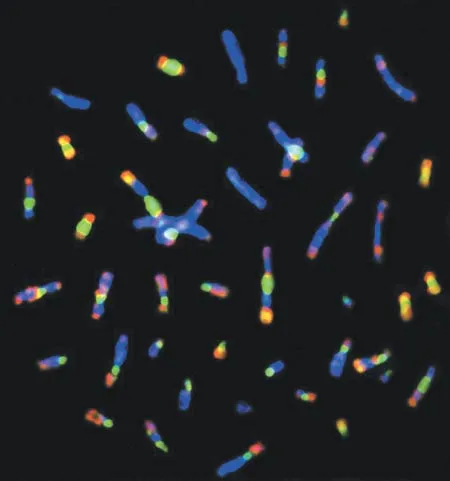
The DNA molecule in the cell nucleus is wrapped up in special coverings known as chromosomes (See, DNA). The total length of the DNA molecule packaged in the chromosomes in a single cell reaches 1 meter (3.3 feet).…

Part 10· ~1 min read

Coacervates

Alexander I. Oparin, a leading proponent of evolution, describes coacervates as blobs of organic matter (mostly containing sugars and short polypeptides), supposedly the precursors of modern cells. 81 At one time…

Part 11· ~2 min read

Coelacanth

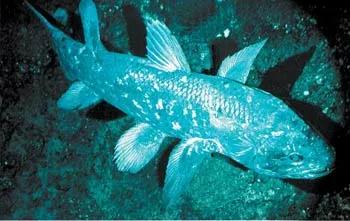
The Coelacanth is a species of fish that used to be put forward as evidence for vertebrates’ “transition from water to land” thesis. Fossil Coelacanths were once regarded as evidence of an intermediate form between…

Part 12· ~1 min read

Cloning

With advances in the science of genetics, the possibility of genetically duplicating living things—and therefore human beings came to the agenda as well. Such a copying process is feasible, though evolutionist…

Part 13· ~1 min read

Cold Trap, the

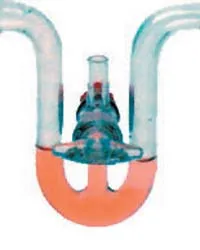
When analyzed realistically, the Miller experiment—first performed to prove that life could have emerged by chance in the primitive atmosphere—can be seen to be riddled with various inconsistencies.

Part 15· ~2 min read

“Common Ancestor” Fallacy, the

This interpretation was put forward by Darwin and repeated by all the evolutionists who followed him. According to this claim, living things have similar organs because they evolved from one common ancestor. For…

Part 16· ~1 min read

Common creation

Similar organs or similar molecular structures in living things provide no support for the theory that they are evolved from any common forerunner. (See Homologous organs .) On the contrary, these similarities refute…

Part 17· ~2 min read

Communism and evolution

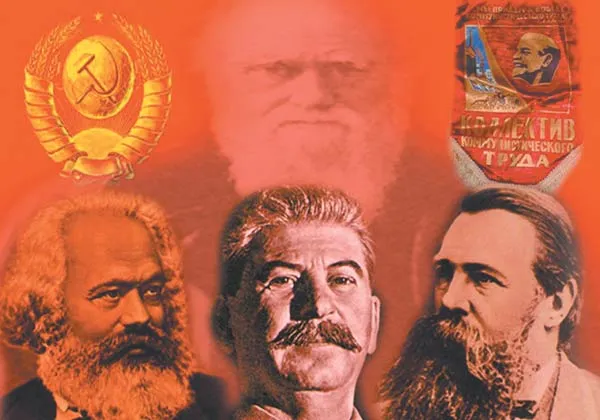
Communism, elevated to its highest point in the 19th century by the two German philosophers Karl Marx and Friedrich Engels, led to such bloodshed as to dwarf even the state massacres of the Nazis and Imperialist…

Part 18· ~1 min read

Confuciusornis

In 1995, Lianhai Hou and Zhonghe Zhou, two paleontologists from the Vertebrate Paleontology Institute in China, discovered a new fossil bird they named Confuciusornis . This winged vertebrate—the same age as…

Part 19· ~1 min read

Conjugation

This is one means by which organisms such as bacteria transmit genes between themselves. In conjugation, two bacteria from the same species come alongside one another and form a temporary cytoplasmic bridge, over…

Part 20· ~3 min read

Creationism

The question of the origin of life—of how the first living things came into existence on Earth—was one of the greatest dilemmas confronting materialism for the last 150 years. That is because the cell, once regarded…

Part 21· ~1 min read

Crick, Francis

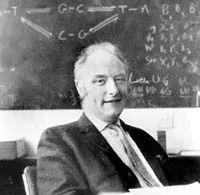
Advances in genetic science and the discovery of nucleic acids—DNA and RNA, in other words—posed new problems for the theory of evolution, which seeks to account for the origin of life in terms of chance and which…

Part 22· ~1 min read

Cro-Magnon Man

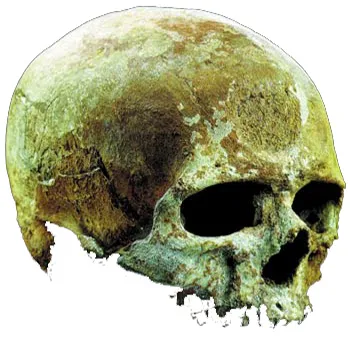
The Cro-Magnon classification was given to a European race of humans estimated to have lived around 30,000 years ago. They had a dome-shaped skull and a broad forehead. Their skull volume of 1,600-cubic centimeters…

Part 23· ~2 min read

Crossing-over

This is the term for the exchange of genes during cell division among similar (homologous) chromosomes from the mother and father. Homologous chromosomes make non-sibling chromatids spiral. Gene exchange takes place…

Part 24· ~2 min read

Crossopterygian

The theory of evolution hypothesizes that quadrupeds (four-footed life forms) evolved from fish. But in fact, this claim is inconsistent, both physiologically and anatomically, and has no basis in the fossil record.…

Part 25· ~4 min read

Cultural Evolution Myth, the

Paralleling their hypothesized biological evolution, evolutionists also suggest that mankind has undergone a cultural progression from the primitive to the more advanced. They relate a great many narratives of no…

Part 26· ~2 min read

Cursorial Theory, the

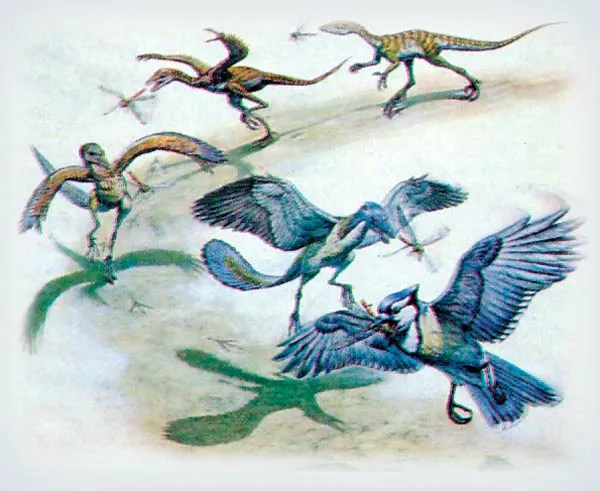
This is one of the two main explanations proposed by evolutionists as to how terrestrial reptiles began to fly. According to this theory, reptiles took to the air vertically, by hopping from the ground. The basic…

Part 27· ~1 min read

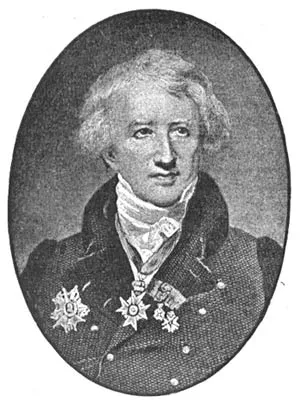
Cuvier, Georges

The French scientist Georges Cuvier (1769-1832), now regarded as the founder of paleontology, was at the same time a geologist and comparative anatomist. He conducted wide-ranging research into the zoology and…

Part 28· ~1 min read

Cytochrome-C

Professor Ali Demirsoy, a leading proponent of evolution in Turkey, has this to say about cytochrome-C, one of the proteins which must be present in the body and which is essential for respiration, and the chances of…