

Reading time: ~2 min read
Fossils found in Cambrian rock strata belong to such complex invertebrates as snails, trilobites, sponges, worms, sea anemones, starfishes, shellfish and jellyfish. (See Trilobites.) The interesting thing is that all these very different species appear suddenly, with no forerunners. In the geological literature, this miraculous event is therefore known as the Cambrian Explosion.
Most of the organisms found in this stratum possess advanced physiological structures and complex systems, such as the eye, gills, and circulation system. These complex invertebrates appeared suddenly, fully formed, and with no links or transitional forms to the single-celled organisms that had previously been the only living things on Earth.
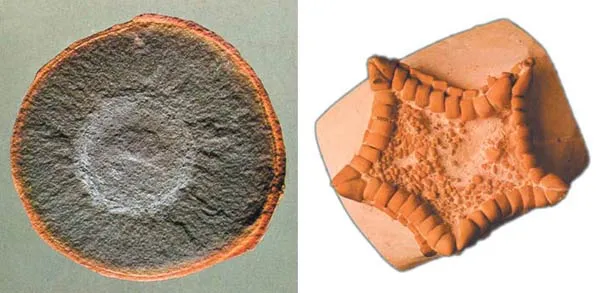
Richard Monastersky, editor of Earth Sciences magazine, a popular evolutionist publication, provides the following information about the Cambrian Explosion, which baffles evolutionists:
. . . remarkably complex forms of animals that we see today suddenly appeared. This moment, right at the start of the earth's Cambrian Period, some 550 million years ago, marks the evolutionary explosion that filled the seas with the earth's first complex creatures. . . .The large animal phyla of today were present already in the early Cambrian and they were as distinct from each other as they are today.64
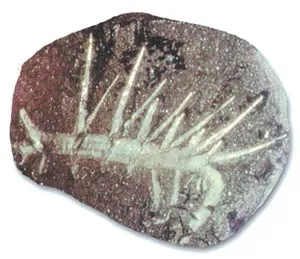
The question of how the world came to be suddenly filled with very different invertebrate species and how so many different species with no forerunners came into being is one that evolutionists are unable to answer.
The British biologist Richard Dawkins, one of the world’s leading proponents of the idea of evolution, has this to say on the subject—which fundamentally invalidates the theses he maintains:
For example, the Cambrian strata of rocks. . . are the oldest ones in which we find most of the major invertebrate groups. And we find many of them already in an advanced state of evolution, the very first time they appear. It is as though they were just planted there, without any evolutionary history. Needles to say, this appearance of sudden planting has delighted creationists. 65
As Dawkins admits, the Cambrian Explosion is clear evidence of creation, since that is the only explanation of how living things appeared with no evolutionary ancestors behind them. The evolutionist biologist Douglas Futuyma also admits this fact:
Organisms either appeared on the earth fully developed, or they did not. If they did not, they must have developed from preexisting species by some process of modification. If they did appear in a fully developed state, they must indeed have been created by some omnipotent intelligence. 66