Origin of Life
ENAZ

Claims and Answers

Terms M

Evolutionists refer to the variety or variation within species as “micro-evolution” and to the hypothesis of the formation of new species as “macro-evolution.” Evolutionists seek to give the impression that…
Part 1· ~2 min read

Macro-Evolution Myth, The

Evolutionists refer to the variety or variation within species as “micro-evolution” and to the hypothesis of the formation of new species as “macro-evolution.” Evolutionists seek to give the impression that…
Part 2· ~3 min read

Macro-Mutation Myth, The

Evolutionists’ inability to find any of the intermediate forms that they claim must once have existed led them to come up with new theses. One of these is the theory of punctuated evolution, which hypothesizes that…

Part 3· ~1 min read

Malthus, Thomas Robert

The theories of the British statistician Thomas Robert Malthus were influential in shaping Darwin’s ideas that in nature, there is a deadly struggle for survival and that every living thing strives only for itself.…

Part 4· ~3 min read

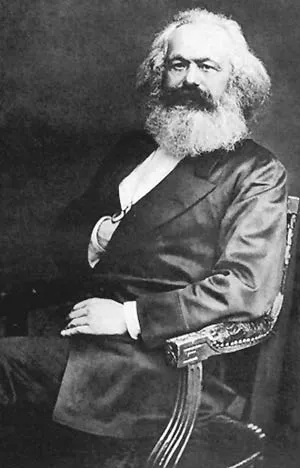
Marx, Karl

Karl Marx, the founder of Communism, described Charles Darwin’s book The Origin of Species , which set forth the basis of the theory of evolution, as “a book which contains the basis of natural history for our views.” 29

Part 5· ~6 min read

Materialism

Materialist philosophy is one of the oldest ideas in history, whose essence is based on the existence of matter, and nothing else. According to this creed, matter has existed for ever, and everything that exists is…

Part 6· ~1 min read

Mayr, Ernst

Ernst Mayr, a well-known evolutionist biologist, is also the founder of the Modern Synthetic Theory of evolution, which—proposed by adding concept of mutation to Darwin’s natural-selection thesis—was given the name…

Part 7· ~1 min read

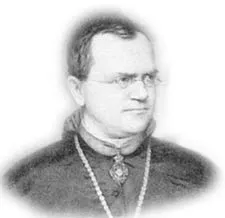
Mendel, Gregor

In 1865, following the publication of Darwin’s The Origin of Species , the Austrian botanist and monk Gregor Mendel published his laws of inheritance, the result of long experiments and observations. ( See The Laws…

Part 8· ~1 min read

Menton, David

David Menton, a professor of anatomy from Washington University, gave a lecture at the 2nd international conference titled “The Collapse of the Theory of Evolution: The Fact of Creation,” held by the Science Research…

Part 9· ~1 min read

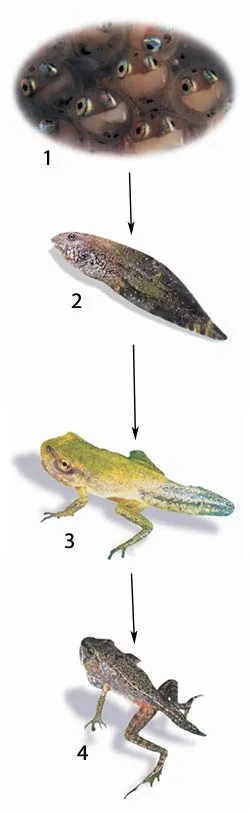
Metamorphosis

Frogs are hatched in water, where they live for a while as tadpoles. They then emerge onto land, after growing limbs and losing their tails, in a process known as metamorphosis . Some people regard metamorphosis as…

Part 10· ~3 min read

Micro-Evolution Myth, The

Evolutionists seek to account for differentiation within species—in other words, the emergence of variations—by means of an imaginary mechanism they refer to as micro-evolution. By accumulating over a long period of…

Part 11· ~7 min read

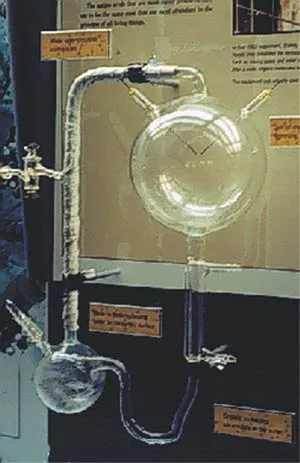
Miller Experiment, The

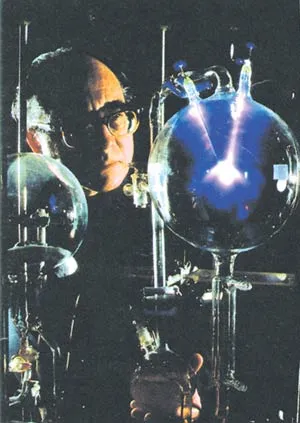
Research into the origin of life to which evolutionists attach the greatest esteem is the Miller experiment, carried out by the American researcher Stanley Miller in 1953. (The experiment is also known as the…

Part 12· ~1 min read

Miller, Stanley

An American researcher, who attempted to synthesize amino acids—the fundamental building blocks of life—in a laboratory environment together with his supervisor, Harold Urey, at Chicago University in 1953. However,…

Part 15· ~1 min read

Modern Synthetic Theory of Evolution Myth, The

To the question of “What is the source of the beneficial changes that cause living things to develop?” scientists meeting at the American Geological Association gave the answer, “Random mutations.” Darwin had given…

Part 16· ~2 min read

Modifications

Modifications are differences in living things that are not inherited, but occur within limited bounds under the influence of external factors. Reproduction between members of the same animal or plant species will…

Part 17· ~3 min read

Molecular Evolution Impasse, The

According to the theory of evolution, gas molecules such as water vapor, hydrogen, methane and ammonia that represented the atmosphere on the primordial world were combined out by ultraviolet rays from the Sun,…

Part 18· ~6 min read

Nonsensical Nature of the Molecular Homology Thesis, The

Evolutionists point to different living things having similar DNA codes or protein structures and interpret this as evidence that these species evolved from some common ancestor. For instance, evolutionist sources…

Part 19· ~1 min read

Morphology

This is the branch of science that studies the shape and structure of organisms as a whole. With plants, it investigates the structures and common organization of the root, stem, leaves and fruits; and with animals…

Part 21· ~1 min read

Morris, John

Professor John Morris is the director of the Institute for Creation Research and a well-known geologist. At the second international conference held by the Science Research Foundation on 5 July 1998, titled “The…

Part 22· ~1 min read

Mosaic Creatures

Using one-sided interpretations, evolutionists sometimes present living things as actually constituting intermediate forms. However, the fact that a species has features belonging to another living group does not…

Part 23· ~1 min read

Mother Nature; An Irrational Concept

The intellectual movement that influenced Darwin—and encouraged him to look for an explanation for the living things he encountered other than one based on creation—was naturalism, one of the main philosophies of the…

Part 24· ~1 min read

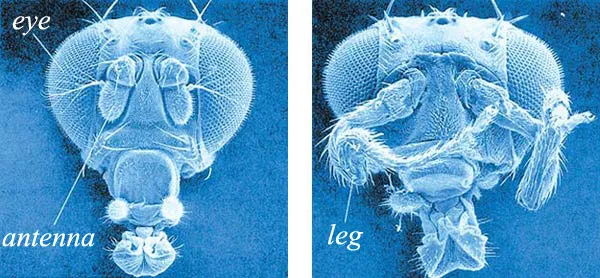
Mutagenic Factors

Breaks and shifts in the genetic data in living things are described as mutation. These affect and damage the DNA in the cell nucleus. Every cause giving rise to mutation—generally, some form of chemical effects or…

Part 25· ~1 min read

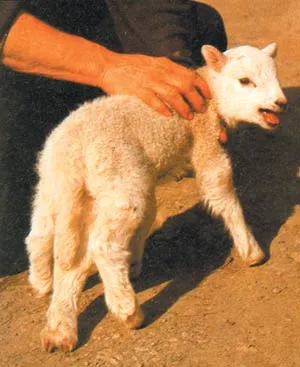
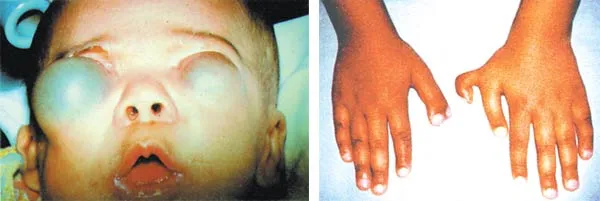
Mutant

Mutant is the name given to any living thing, cell or gene that has undergone obvious changes in its DNA. Mutations are breaks and shifts that occur as a result of physical (for example, radiation) or chemical…

Part 26· ~4 min read

Mutation: An Imaginary Mechanism

Mutations are breaks and shifts that occur as a result of radioactive or chemical damage to the DNA molecule that carries genetic data. Mutations damage the nucleotides that make up DNA, or else cause them to change…