Origin of Life
ENAZ

Claims and Answers

Terms O

Evolutionists maintain that all living things with similar structures and organs share an evolutionary relationship. One of the perfectly clear examples that invalidate this claim, known as homology , is the octopus…
Part 1· ~2 min read

Octopus’s Eye, The

Evolutionists maintain that all living things with similar structures and organs share an evolutionary relationship. One of the perfectly clear examples that invalidate this claim, known as homology , is the octopus…
Part 2· ~1 min read

OH 62: A Species of Ape

Evolutionists long suggested that the fossil creature to which they gave the name Homo habilis was capable of walking upright. They thus thought that they had found a link between ape and man. However, the new H.…

Part 4· ~1 min read

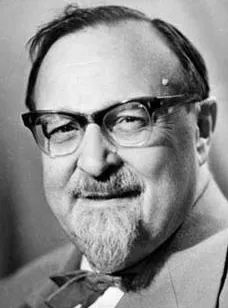
Oparin, Alexander I.

The Russian biologist Alexander I. Oparin, founder of the concept of “chemical evolution,” could not obtain any findings to shed light on the origins of life, despite all his theoretical research. In his 1936 book…

Part 5· ~3 min read

Open System

The term “open system” refers to a thermodynamic system with an external energy source, into which matter enters and departs. Since the theory of evolution conflicts with the Second Law of Thermodynamics (the Law of…

Part 6· ~3 min read

Ordered System

The theory of evolution clearly conflicts with the second law of thermodynamics (the law of entropy), one of the most basic laws of physics. ( See The Second Law of Thermodynamics )

Part 8· ~1 min read

Orgel, Leslie

Probability calculations show that complex molecules such as proteins and nucleic acid (RNA and DNA) cannot possibly come into being separately and by chance.

Part 9· ~6 min read

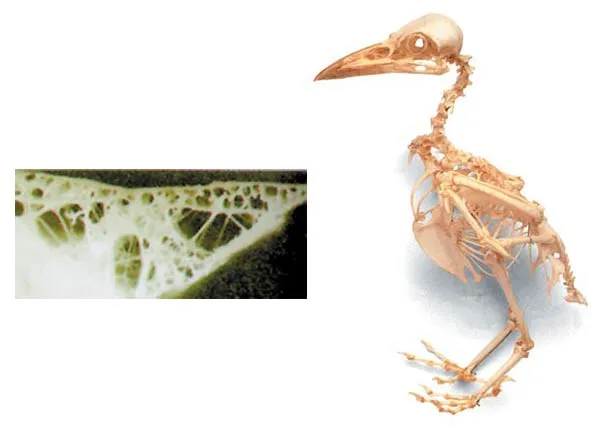
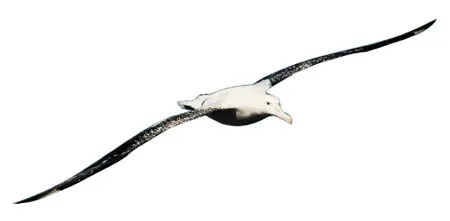
Origin of the Avian Lung

Another factor that makes the scenario of evolution from dinosaur to bird impossible is the unique structure of the avian lung, which cannot be explained in evolutionary terms.

Part 10· ~4 min read

Origin of the Bacteria

The oldest fossils are those of 3.5 billion year-old bacteria. From these remains, evolutionists claim that lifeless matter produced the first single-celled bacterium and claim, further that the first bacteria…

Part 11· ~4 min read

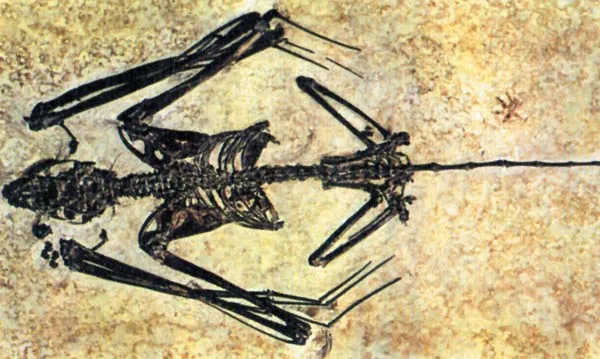
Origin of the Bats

Bats, the only flying mammals, are without doubt one of the most interesting creatures in their class.

Part 12· ~2 min read

Origin of Behavior

Evolutionists regard all animal and human behavior as having specific evolutionary origins, believing that the present characteristics they possess have been passed down from their supposed ancestors, from the first…

Part 13· ~3 min read

Origin of the Birds

The theory of evolution maintains that birds descended from small, carnivorous theropod dinosaurs—in other words, from reptiles. In fact, however, comparison of birds and reptiles reveals that these classes are very…

Part 14· ~3 min read

Origin of the Bird Feathers

The theory of evolution maintains that birds evolved from reptiles, but is totally unable to account for the enormous differences between these two separate living classes. One feature that widens the unbridgeable…

Part 15· ~2 min read

Origin of the Fish

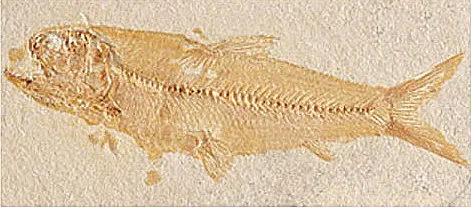
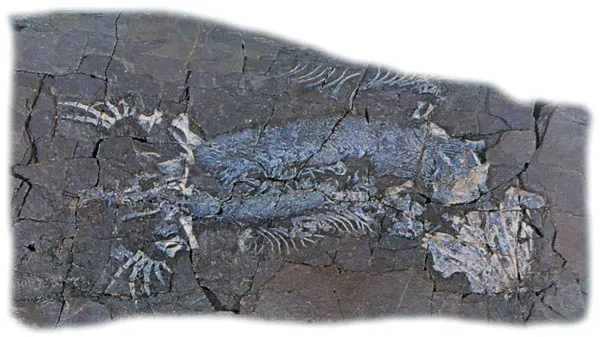
Evolutionists maintain that invertebrate marine creatures that arose during the Cambrian Period developed into fish over the course of tens of millions of years. However, in the same way that Cambrian Period…

Part 16· ~2 min read

Origin of the Flies

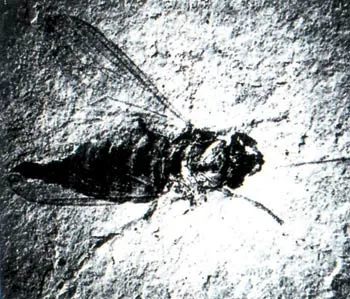
One explanation offered for the origin of birds is the cursorial theory, according to which reptiles’ forearms developed into wings as they needed speed in their attempts to catch insects. This theory lacks any…

Part 17· ~1 min read

Origin of Flight

— See The Arboreal Theory, The Cursorial Theory, and The Transition from Land to the Air Myth.

Part 18· ~3 min read

Origin of the Horses

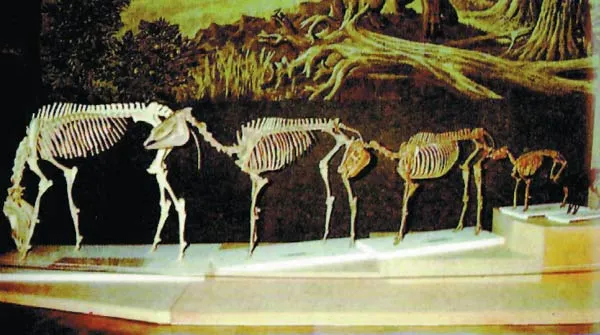
Until recently, schematic illustrations of the evolution of horses have been a prominent proof of the theory of evolution. Today, however, many evolutionists have openly refuted the validity of this scenario. In…

Part 19· ~2 min read

Origin of the Insects

With regard to the origin of birds, evolutionist biologists claim that certain reptiles that used their front legs developed wings to catch insects and evolved into birds. According to this speculative thesis, known…

Part 20· ~7 min read

Origin of Instinct

Evolutionist scientists use the word instinct is to describe certain behavior that animals possess from birth. However questions such as “How did they acquire these instincts?” “How did instinctive behavior first…

Part 21· ~1 min read

Origin of the Language

Regarding the origin of language, there are two different views.. The first is that a human is born with a “blank slate” mind and merely learns to speak from observing those around him. However, the famous linguist…

Part 22· ~3 min read

Origin of the Mammals

The theory of evolution maintains that a number of living things evolved by emerging from the sea, turning into amphibians and then into reptiles, and that birds evolved from those reptiles. According to the same…

Part 23· ~7 min read

Origin of the Marine Mammals

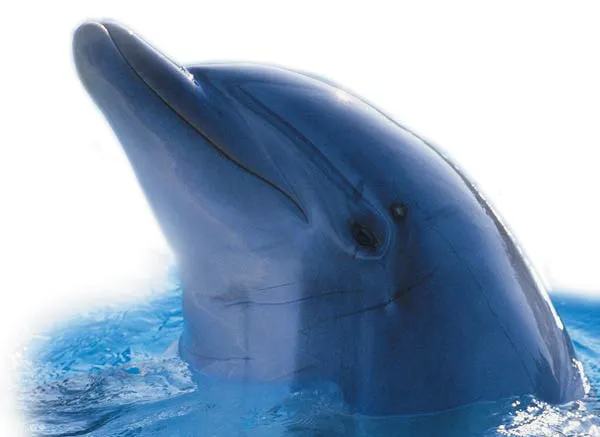
Whales and dolphins are classified as mammals because, just like terrestrial mammals, they give live birth, suckle their young, breathe with lungs and are warm-blooded. But the origin of marine mammals is one of the…

Part 24· ~1 min read

Origin of the Marine Reptiles

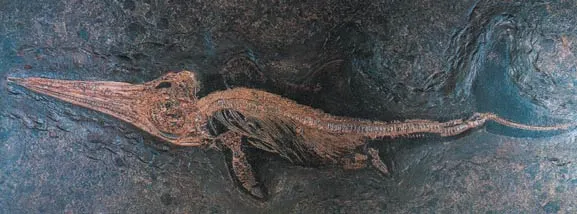
The great majority of marine reptiles are now extinct, though turtles still survive as representatives of this group. The origin of these creatures cannot be explained through any evolutionist approach. The most…

Part 25· ~1 min read

Origin of the Quadrupeds

Quadrupeds (or tetrapods) is the name given to four-footed land-dwelling vertebrates. This general classification includes amphibians, reptiles and mammals. The Darwinists’ explanation is that quadrupeds evolved from…

Part 26· ~3 min read

Origin of Photosynthesis

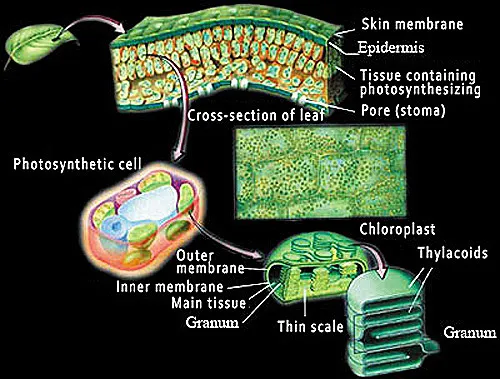
Photosynthesis is a major factor in sustaining life on Earth. Were it not for photosynthesis, there would be no plants, and if there were no plants there would be little oxygen—and no animals and human beings. This…

Part 27· ~4 min read

Origin of the Plant Cells

Plant and animals are composed of a type of cell known as eukaryotic . Eukaryotic cells’ main distinguishing features are that they possess a nucleus, inside which is found the DNA molecule that encodes genetic…

Part 28· ~3 min read

Origin of Reptiles

Creatures such as dinosaurs, lizards, tortoises and crocodiles all belong to the reptile family. Reptiles possess unique characteristics: They are all covered in scales. They are cold-blooded and cannot produce their…

Part 29· ~2 min read

Origin of Species, The

In 1859, Charles Darwin published a book called The Origin of Species, By Means of Natural Selection or, The Preservation of Favored Races in The Struggle for Life . In this book, Darwin added his own errors of logic…

Part 30· ~1 min read

Origin of Turtles

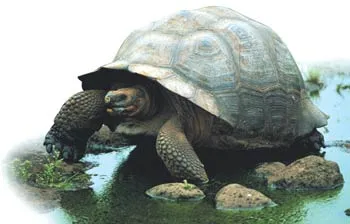
Turtles, members of the reptile family, emerge suddenly in the fossil record together with their unique shells. As evolutionist sources put it, “Unfortunately, the origin of this highly successful order is obscured…

Part 31· ~3 min read

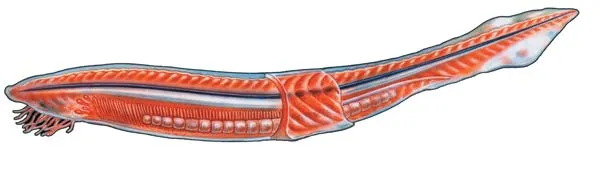
Origin of Vertebrates

One of the phyla that emerged suddenly in the Cambrian period is the phylum Chordata, These are a sub-class of vertebrates, with a central nervous system. Vertebrates are divided into such basic classes as fish,…

Part 32· ~3 min read

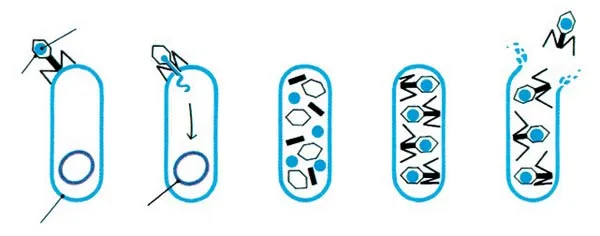
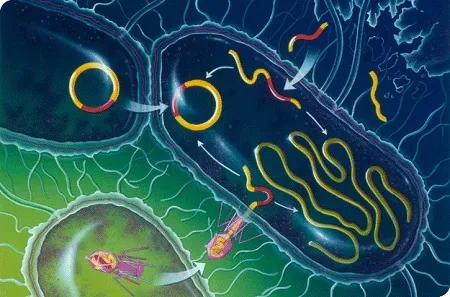
Origin of Viruses

Some evolutionists maintain that viruses represent the biological beginning of life:

Part 33· ~2 min read

Origins of Bipedalism (Walking Upright)

Human beings walk upright on two legs in a way not encountered in any other life form. ( See Bipedalism ,) Some other animals possess a limited ability to walk on two legs. Mammals such as the bear and monkey can…

Part 34· ~8 min read

Origin of Whales

Whales and dolphins comprise a group known as marine mammals Just like mammals on land, they give birth to their young, suckle them, use lungs to breathe and warm their own bodies. The origin of marine mammals is one…

Part 35· ~1 min read

Origin of the Wings

How could the immaculate structure of wings have emerged as the result of consecutive random mutations? That question is one that evolutionists are unable to answer. They are totally unable to explain how a reptile’s…

Part 36· ~1 min read

Orthogenesis Muddle, The (Directed Selection)

Orthogenesis is an old thesis that is no longer accepted even by theory of evolution’s own adherents. This thesis assumes that living things evolved not according to environmental conditions, but solely according to…

Part 37· ~4 min read

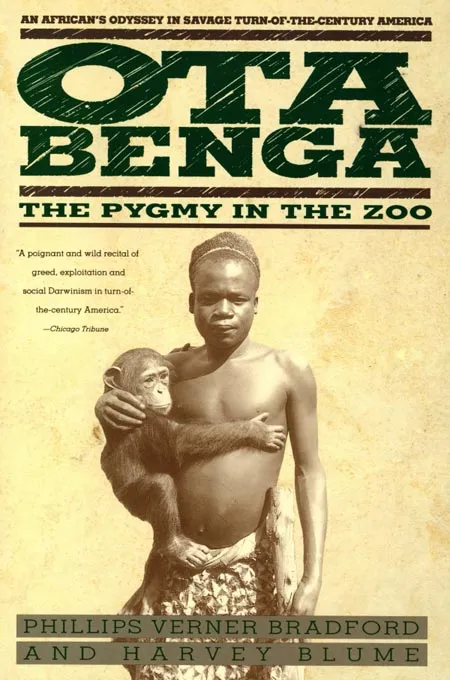
Ota Benga

After Darwin claimed that human beings evolved from ape-like creatures in his book The Descent of Man , a search began for fossils to back up his theory. Some evolutionists, however, believed that half-man, half-ape…