

Reading time: ~4 min read
Vertebrates are defined as organisms with a spinal column and spinal cord, a skeleton consisting of bone or cartilage, a brain protected inside a skull, a closed circulatory system and a heart consisting of two, three or four chambers. They are divided into five classes: fish, amphibians, reptiles, birds and mammals. Widely distributed across the world, their bodies contain a wide variety of highly developed and complex structures.
Vertebrates are a group included in the phylum Chordata. Some members of this phylum are vertebrate and others invertebrate, but all possess a nerve tube known as the notochord. For a great many years, the Cambrian fossil record lacked vertebrate, and for that reason, the earliest vertebrate specimens were thought to belong to the later Devonian.
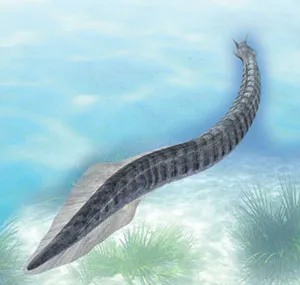
Evolutionist paleontologists believed that vertebrates appeared relatively later than the other main groups, since vertebrates as a group—of which man is also a member—are exceedingly complex in their anatomy. Evolutionists claimed that this group must have appeared in stages and at a relatively late date, and for long used the lack of any vertebrate remains in Cambrian rocks to bolster their position. As the evolutionist paleontologist Stephen Jay Gould admits, Darwinist textbooks particularly stressed the fact that no evidence of vertebrates in the Cambrian had ever been found, seeking to portray this as evidence that Cambrian rocks confirmed the truth of Darwin’s theory of evolution. In their scenarios regarding vertebrate evolution, evolutionists suggested that Pikaia, a Cambrian chordate, was the ancestor of all vertebrates.
Yet as they were soon to see, these claims were unjustified.
Excavations performed in Cambrian rock beds in China produced results that completely overturned evolutionist scenarios regarding vertebrates. The chordate now known as Haikouella, unearthed by the Nanjing Institute of Geology and Paleontology’s Jun-Yuan Chen and his team, possessed a brain, heart and circulatory system, gills, a notochord, a well developed musculature and—in all likelihood—a pair of eyes.
The science journalist Fred Heeren describes how the discovery of Haikouella produced results that were the exact opposite of evolutionist expectations regarding Pikaia:
Biologist had been expecting to see something that would like a primitive ancestor to the middle Cambrian animal called Pikaia, formerly promoted as the world’s earliest chordate. Rather than finding evidence that Pikaia had a less-complex ancestor, Chen instead found a chordate that already displayed many vertebrate characteristics 15 million years earlier.82
Thus it was that evolutionists had to abandon Pikaia, which for decades they had depicted in textbooks as the ancestor of vertebrates. The fact that the first known chordate had a highly developed anatomy and—moreover, that it had lived 15 million years before Pikaia—totally overturned the claimed progression of the theory of evolution. The elimination of this fictitious ancestor thus dealt a severe blow to the scenario of vertebrate evolution.
Yet the real blow came with the discovery that vertebrates had also lived in the Cambrian! These findings were the remains of a fossilized fish, dating back 530 million years, found at Haikou, near Kunming, the regional capital of the Chinese province of Yunnan. These remains literally stunned evolutionist scientists.
Research by Chinese, British, French and Japanese scientists showed that this was indeed a vertebrate. All the details of the animal’s head and backbone could be seen in the remains. Such key features as a lobate extension to the head, eyes and possible nasal sacs provided detailed information regarding the creature.83Many of the vertebrate features were right before scientists’ eyes, and, what is more, in a fossil dating back 530 million years old.84
This fish was given the name of Haikouichthys. Scientists are agreed that it is a true fish because of its gills and the zigzag arrangement of the muscles known as myotomes—features unique to fish.85Besides, Haikouichthys is not the only fossil fish that belongs to Cambrian. Another fossil, known as Myllokunmingia, was unearthed in Chengjiang. Philippe Janvier of the National Museum of Natural History in Paris says that this, too, is definitely a vertebrate and describes its significance:
It’s important because up to now the vertebrates were absent from the big bang of life, as we call it—that is, the great early Cambrian explosion, where all the major animal groups appeared suddenly in the fossil record. ... It is practically certain that these are vertebrates.86
The theory of evolution maintains that organisms emerged gradually, and that their complex structures are expected to appear only toward the end of the fictitious evolutionary process. Given that point of view, the chordate Haikouella and the Cambrian fish Haikouichthys and Myllokunmingia represent major problems, because these animals have reduced by 15 million years the time necessary for the chordate evolution scenario and reduced the time necessary for the evolution of fish by a full 50 million.
Thus, the sudden appearance of these animals has reduced to nothing the time that these organisms supposedly need to evolve.
Naturally, these discoveries caused great astonishment among evolutionist circles, who needed to explain the sudden appearance of vertebrates in the Cambrian Period. This only added another problem to the Cambrian, which was in any case full of question marks. A great many evolutionists have finally had to abandon their previous scenarios regarding the evolution of vertebrates and to admit that on this subject, they have no answers at all.