Reading time: ~1 min read
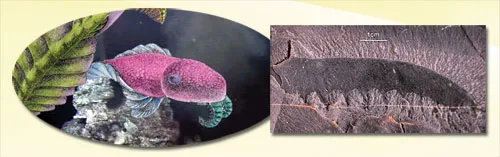
Anomalocaris, one of the largest Burgess Shale animals, averages 45 to 60 centimeters (17 to 23 inches) in length, although it can sometimes be as long as 1 or even 2 meters (3 to 6.5 feet). Its mouth section resembled a pineapple, and had appendages that helped catch its prey. The largest limbs were attached at the anterior part of the head, and were also probably used for capturing prey. Anomalocaris had teeth in its powerful jaw. The largest known appendages were some 20 centimeters (7.8 inches) in size. It was able to open its jaw in order to admit its prey and possessed various means of drawing its prey into its mouth. Its body was flanked by a series of lobes, which were probably used in swimming.76
Like present-day sharks, Anomalocaris was a hunter perfectly adapted to its surroundings. Scientists have worked hard to determine which phylum the animal can be ascribed to, but finally included Anomalocaris in a phylum of its own.77