

Reading time: ~2 min read
The trilobite eye’s exceedingly complex structure exhibits the most perfect details. Its components are linked to one another with the most sensitive arrangements, which makes the eye a fully functioning whole. These arrangements reveal a whole chain of miracles: The lenses are specially made out of calcite and chitin, and the refractive indexes of the two substances are perfectly compatible. Had there been some other substance besides chitin beneath the lens, then this perfect focusing would not be possible. Or if the calcite were in another form than crystalline, the lenses would not be transparent. Were it not for the double lens structure, if there were only the upper lens unit composed of calcite, the trilobite would be unable to see under water, and its eyes would serve no purpose. If the intermediate surface between the calcite and chitin units were different from that calculated by Huygens and Descartes, then light could not be focused so accurately. Or if there were any more or fewer magnesium atoms set out along the course of that surface, then the lenses could not correct the light refraction. Even if all the other conditions had been met, the eye would still be unable to serve any useful purpose.
This sequence of miracles inevitably raises a number of important questions:
How did the trilobite acquire this optic system? How did calcite come to form lenses so perfectly installed in the animal’s eyes? How did the chitin and magnesium atoms come to be arranged in the right combinations beneath these lenses? How did the designs by Huygens and Descartes—among an infinite number of possible mathematical variables, the only ones that could give rise to such sensitive vision—come to be integrated in the eye? Could all this have taken place by chance? Or could a trilobite have realized that it needed such an eye and have developed it by itself, by performing the requisite mathematical calculations?
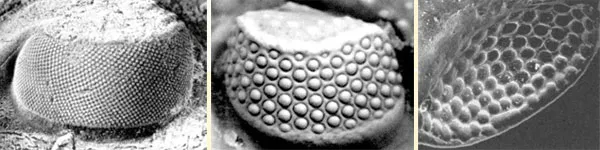
Of course, the trilobite eye is not the product of the trilobite’s own doing or of chance mutations. Clearly, lightning striking an observatory will damage the telescopes inside rather than turning them into more advanced devices.
The trilobite can only be the bearer, the exhibitor of all these flawless features. No doubt this sublime creation belongs to Allah, Lord of the worlds. The trilobite eye is a work in which Allah exhibits His sublime artistry in all its magnificence. Allah is the flawless Creator, and brought trilobites and all other living things into being out of nothing.