

Reading time: ~3 min read
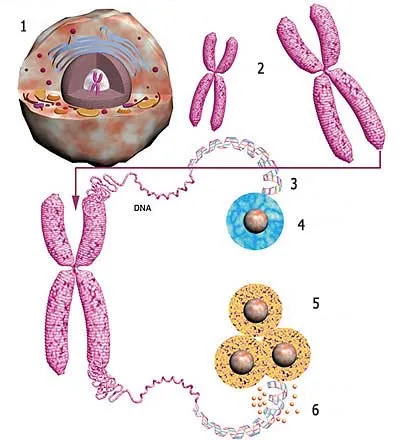
One of the genes' most important tasks is controlling how embryos develop. Intensive adjustments during this process mean that the dividing cell's DNA is copied accurately, that any errors in the DNA are rectified and that every new-formed cell receives a full complement of chromosomes. In this process, some genes have various control points that ensure that errors are checked and that if anything goes wrong, the process is halted for repairs to be made. If an irreparable error arises in a new cell's DNA, the pre-programmed cell death known as apoptosis takes place. By this widespread method, the body gets rid of cells it has no use for. The cells that self-destruct by apoptosis break apart and are recycled by a kind of white blood cells known as macrophages. Apoptosis helps protect the body against genetically impaired cells that might lead to cancer, which can arise when normal cell division is impaired. Division then takes place in an uncontrolled and irregular manner, and genetic impairments accumulate, leading to a cancerous tumor. Apoptosis also plays a very important role in embryonic development and the protection of adult tissues.
One of the most important discoveries made in molecular biology is that some genes have more influence than others. They are organized according to their degrees of empowerment. For example, some genes are responsible only for fixed tasks such as making hemoglobin, hair growth or producing digestion enzymes. These molecular workers have regulator genes, which operate and halt them. During fetal development, for example, they stop the hemoglobin gene from working setting it back in motion when necessary. Regulator genes act like supervisors of both the "worker" and "middle-management" genes. Their decisions affect dozens or even hundreds of lower units; and so vitally important is their work that if they are damaged during the embryonic stage, death in the womb can result.
Reflect that genes are mere molecules, made up of atoms. So how have these molecules established such an organization among themselves? How is it that a molecule decides to stop a human being from growing any taller and transmits this decision to others? How do they understand that decision and act on it? Who installed this discipline? Furthermore, trillions of genes have been performing these disciplined tasks with the same, obedience, intelligence and consciousness for millions of years. It is nonsensical to maintain that any such system came about by chance. No doubt it is Allah, Lord of All, Who programs genes in the most rational and flawless manner.
Say: "Who is the Lord of the heavens and the Earth?" Say: "Allah." Say: "So why have you taken protectors apart from Him who possess no power to help or harm themselves?" Say: "Are the blind and seeing equal? Or are darkness and light the same? Or have they assigned partners to Allah (Who create as He creates, so that all creating seems the same to them?" Say: "Allah is the Creator of everything. He is the One, the All-Conquering." (Surat ar-Ra'd, 16)