

Reading time: ~4 min read
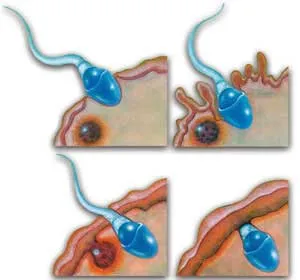
The fertilization of an egg by a spermatozon is the beginning of a new human life. When the sperm and egg encounter one another, they are biologically able to recognize one another thanks to the way that the molecules on their surfaces fit exactly into one another. These molecules lock on to one another, and various sperm cells bond to the soft shell of the egg and begin striving to enter.
But only one out of the many sperms is successful. Each one carries its own genetic package, and every sperm cell differs from all the others in many regards. Since the father's sperm carries the genetic message that determines the baby's gender, whichever sperm enters the egg first will be the one that determines the embryo's gender. Fertilization is the term for the moment that the successful sperm is embedded completely in the egg, with its tail and all other parts. Each one of these stages takes place within the destiny set out by Allah, Who reveals this fact in verses:
We created you so why do you not confirm the truth? Have you thought about the sperm that you ejaculate? Is it you who create it, or are We the Creator? (Surat al-Waqi'a, 57-59)
When the sperm fertilizes the egg, the mother and father's genes combine to determine all the features of the as yet unborn child. Each of the thousands of inherited genes has very particular functions, determining the unborn baby's future hair and eye color, the shape of its face, its skeletal structure, and the countless details in its internal organs, brain, nerves and muscles.
The first copy of the DNA molecule that individuals will bear in every cell until the end of their lives forms inside the initial cell when the sperm and egg join together. The well-known chemist Prof. Wilder Smith emphasizes the perfection exhibited in the egg cell:
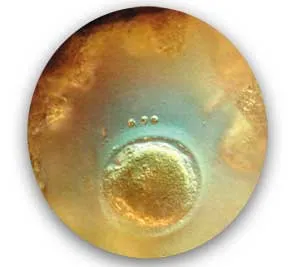
On paper using our alphabet system, this human genetic information on one human zygote would fill over 1,000 volumes each of 500 pages--a total of 500,000 printed pages. That is, one human egg the size of a pinhead holds 500,000 printed pages' worth of information and chemical instructions. The egg--and the cell in general--is a masterpiece of miniaturized information storage and retrieval.101
With the addition of a sperm cell's genetic information to an egg cell, a total of 1027 atoms assume an extraordinarily organized form.102 In his book , Our Molecular Nature, David S. Goodsell describes the combining of these genetic data:
Parents each provide half of the set of 46 strands, so our cells contain two similar sets of 23 strands. The choice between reading the mother's or the father's version in each particular case provides the rich mixture of inherited traits seen in children. Features that may be traced to a single protein show very specific rules of heredity; if neither parent provides the recipe for tyrosinase, the child will be albino. Other personal features –shape of the nose and eyes, build of body, temperament– may depend on the combined action of many regions of DNA, leading to subtle mixtures of recognizable traits from each parent.103
The astonishing information contained in the DNA of all living things clearly reveals intelligence and the fact of creation. Every new individual will have an utterly unique genetic program. The moment that the combining of the genetic data from the mother and father is complete, the new cell is given the name zygote. That single cell then divides into two others, each identical to the original.