
Reading time: ~3 min read
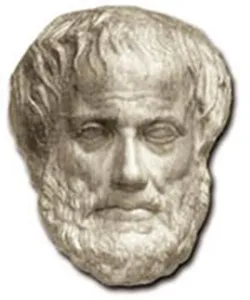
Although European paganism was suppressed by Christianity, it did not die out. A number of European thinkers, influenced by the works of ancient Greek philosophers, such as Plato or Aristotle, began to revive concepts from the pagan world.
This neo-pagan current became increasingly influential, and in the 19th century, surpassed Christianity and imposed itself on Europe. It will be useful to examine the main outline of this lengthy process here, without necessarily going into details.
The vanguard of neo-pagan movement was those thinkers known as "humanists." Influenced by ancient Greek sources, they tried to spread the pagan philosophies of such philosophers as Plato and Aristotle. The belief they professed in the name "humanism" was a perverted philosophy that ignored the existence of God and man's responsibilities to Him, but instead considered man a great, superior, and independent being. The influences of humanism took on further aspects with the philosophy of the Enlightenment in the 17th and 18th centuries. Enlightenment philosophers were influenced by and fiercely defended materialism, an idea which developed in ancient Greece. (Materialism is a dogmatic philosophy put forward by such Greek thinkers as Leucippus and Democritus, positing that only matter exists).
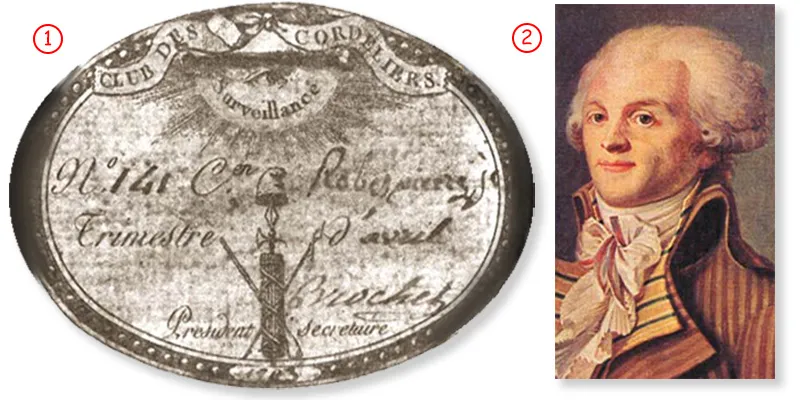
The rebirth of paganism is clearly evident in the French Revolution, widely accepted as the political end-product of Enlightenment philosophy. The Jacobins, who led the bloody "terrorist" period of the French Revolution, were influenced by paganism, and nurtured a great hatred for Christianity. As a result of intensive Jacobin propaganda during the fiercest days of the revolution, the "rejection of Christianity" movement became widespread. In addition, a new "religion of reason" was established, which was based on pagan symbols rather than Christianity. Its first signs were seen in the "revolutionary worship," on the Festival of Federation on July 14, 1790, which were then widely disseminated. Robespierre, the ruthless leader of the Jacobins, brought about new rules for "revolutionary worship," setting out their principles in a report under the name "Cult of the Supreme Being." The most significant outcome of these developments was the conversion of the famous Notre Dame Cathedral into a "temple of reason." The Christian icons on its walls were torn down, and a female statue known as the "goddess of reason" was erected in the center of it, in other words, a pagan idol.
These pagan tendencies were portrayed among the revolutionaries by a number of symbols. The liberty cap worn by the revolutionary guards of the French Revolution, and which often became a symbol of the revolution, descended from the pagan world and the worship of Mithras.5
The rebirth of paganism, and the beginning of its intellectual dominance over Europe, also led the way to a rebirth of fascism, itself a system rooted in the pagan world. In fact, Nazi Germany, with its system reminiscent of that practiced in Sparta, was based on paganism. Towards this development, a number of fundamental cultural changes were necessary between the French Revolution, at the end of the 18th century, and Nazi Germany, at the beginning of the 20th. These important changes were brought about by a number of thinkers during the 19th century. The most important of these was Charles Darwin.
That is because God- He is the Truth, and what you call upon besides Him is falsehood. God is the All-High, the Most Great. (Koran, 31:30)