

Reading time: ~4 min read
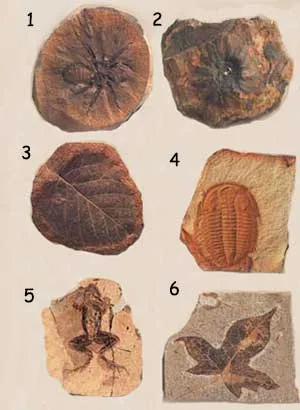
According to evolutionists, all living things developed from one another. A previously existing species turned into another one over time, and all the species eventually emerged in this manner. According to the theory, this transition occupied a period of hundreds of millions of years, and happened in stages.
Yet if these evolutionists' claims were true—if, in other words, fish had evolved into reptiles, reptiles into birds, etc., as BBC claims—then countless "intermediary species" should also have emerged and lived during this transformation period.
For instance, some half-fish/half-reptiles should have lived in the past that had acquired reptilian traits in addition to the fish traits they already had. Or there should have existed some reptile-birds with novel bird traits in addition to their pre-existing reptilian traits. If such creatures in a transitional process had existed, they would have been crippled, handicapped, and defective organisms.
Evolutionists refer to these imaginary creatures, which they believe to have lived in the past, as "transitional forms." If such animals had really existed, there should have been millions and even billions of them. More importantly, the remains of these strange creatures should be present in the fossil record. The number of these transitional forms should have been even greater than the present animal species and their remains should be found all over the world. This is a fact which Darwin also accepted.
Even Darwin himself was aware of the absence of such transitional forms. But he hoped that they would be found in the future. Despite his hopefulness, he realized that the biggest stumbling-block to his theory was the missing transitional forms. Therefore, in his book The Origin of Species he wrote the following in the chapter "Difficulties of the Theory":
…Why, if species have descended from other species by fine gradations, do we not everywhere see innumerable transitional forms? Why is not all nature in confusion, instead of the species being, as we see them, well defined?… But, as by this theory innumerable transitional forms must have existed, why do we not find them embedded in countless numbers in the crust of the earth?… But in the intermediate region, having intermediate conditions of life, why do we not now find closely-linking intermediate varieties? This difficulty for a long time quite confounded me.8
Despite evolutionists' best efforts, no transitional forms have yet been uncovered. All scientific findings have shown that, contrary to the beliefs of evolutionists, life appeared on earth all of a sudden and fully-formed. A famous British paleontologist, Derek V. Ager, admits this fact even though he is an evolutionist:
The point emerges that if we examine the fossil record in detail, whether at the level of orders or of species, we find—over and over again—not gradual evolution, but the sudden explosion of one group at the expense of another.9
Another evolutionist paleontologist Mark Czarnecki comments as follows:
A major problem in proving the theory has been the fossil record... This record has never revealed traces of Darwin's hypothetical intermediate variants—instead species appear and disappear abruptly, and this anomaly has fuelled the creationist argument that each species was created by God.10
So, since the fact is that no intermediary forms have ever been found, and that this represents a serious problem for the theory of evolution, how is it that BBC and other like-minded evolutionist media are able to continue propagating the myth that "fish became reptiles and reptiles became birds?" The answer to this question is given in an article in the journal Science:
A large number of well-trained scientists outside of evolutionary biology and palaeontology have unfortunately gotten the idea that the fossil record is far more Darwinian than it is. This probably comes from the oversimplification inevitable in secondary sources: low-level textbooks, semipopular articles, and so on. Also, there is probably some wishful thinking involved. In the years after Darwin, his advocates hoped to find predictable progressions. In general these have not been found yet the optimism has died hard, and some pure fantasy has crept into textbooks.11
As revealed in Science, behind BBC's unscientific claim lie such factors as "not being unbiased and imagining." BBC presented evolutionary fantasies to the viewer like a fairy tale, talking about "bacteria turning into human beings," and "reptiles that were birds and fish that walked on land," as if it were talking about "the prince who turned into a frog."
References
- - Charles Darwin, The Origin of Species, pp. 172, 280 ↩
- - Derek A. Ager, "The Nature of the Fossil Record," Proceedings of the British Geological Association, Vol. 87, 1976, p. 133 ↩
- - Mark Czarnecki, "The Revival of the Creationist Crusade," MacLean's, 19 January 1981, p. 56 ↩
- - Science, July 17, 1981, p. 289 ↩