

Reading time: ~5 min read
When life is mentioned, plant and animal species generally come to mind. Some people even imagine that life consists solely of these. However, another living group which—despite being too small to be seen with the naked eye—constitutes 25% to 50% of all living species on the Earth: micro-organisms.79
Bacteria represent the most important portion of these micro-organisms. These may be spherical, rod-like or spiral in shape. Most are smaller than 0.001 millimeters (0.00003937 inch) in size, so small that hundreds of thousands could fit into the period at the end of this sentence.80
Every ecosystem and all living species depend, either directly or indirectly, on the activities of bacteria. (Their essential importance to the delicate balances of life on Earth will be described in later sections.) They can be found just about everywhere.81 Thousands of species of bacteria exist in ice caps, hydrothermal vents, environments with high levels of salinity or acid, amid chemical contaminants or pollutants, in the organs and tissues of animals and human beings, in the depths of the seas where there is little or no oxygen, and in the deep layers of the Earth.
For example, the intestines of a healthy human being are an ecosystem containing 400 different species of bacteria, organisms that play a very important role in the regular functioning of the intestines.82
Bacteria are part of a group that exhibits the greatest diversity among living things. but about which the least is known.83 Their diversity is far beyond the grasp of even 21st century technology. You could say that a gram of soil containing thousands of species of bacteria and billions of individuals resemble a rain forest at the microscopic level. In other words, an extraordinary diversity similar to a rain forest's can also be found in a handful of earth under the microscope.

To date, scientific studies aimed at determining bacteria and microbe species are very much fewer than actually needed. It is difficult to investigate these organisms for a number of reasons: Most species of bacteria cannot be raised in the laboratory or in cultures, even though a drop of sea water or tiny amount of soil contains billions of them. Even the unbelievable wealth of bacteria species has been realized only in recent years, with advances made in our knowledge of genetics.
When the genetic structures of microbes that appear very similar even under the microscope were examined, they were found to be actually very different species. In the words of the Northwestern University microbiologist David Stahl, two microbes can be "as different from each other as a grizzly bear from an oak tree."84
In his book In Search of Nature, Edward O. Wilson summarizes the latest developments regarding these micro-organisms:
The true black hole of systematics, however, may be bacteria. Although roughly 4,000 species have been formally described, recent studies in Norway have indicated the presence of from 4,000 to 5,000 species, almost all new to science, among the 10 billion individual organisms found on average in each gram of forest soil, and another 4,000 to 5,000 species, different from the first set and also mostly new, in an average gram of nearby marine sediments.85
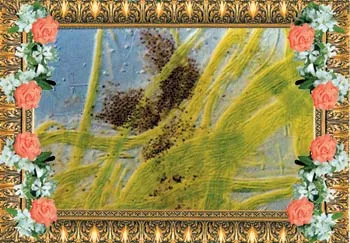
Another expert on the subject, Rita Colwell, former President of the Maryland University Biotechnology Institute, gives the following figures regarding the wealth of bacteria on Earth:
Only 3,000-4,000 species of bacteria have been described. It has been estimated that there may be as many as 300,000 species of bacteria, but more likely the number is closer to 3,000,000.86
Most of us think of bacteria as entities that merely cause disease. Yet this is not correct. Only a small fraction of bacteria species are agents of disease.87 As Andrew Pollack described in an article, bacteria play an essential role in the formation and continuity of life on Earth and in maintaining balances essential to life.88 This fact is set out by Professor James Shapiro from the Chicago University Department of Biochemistry and Molecular Biology:
Although bacteria are tiny, they display biochemical, structural and behavioral complexities that outstrip scientific description. In keeping with the current microelectronics revolution, it may make more sense to equate their size with sophistication rather than with simplicity. . . . Without bacteria, life on earth could not exist in its present form.89
Although they multiply very rapidly and are so small and numerous, bacteria act in such ways as to permit not the slightest confusion. There is only one explanation: Every detail regarding bacteria, from the exceedingly complex activities they perform (such as the photosynthesis performed by cyanobacteria) to the numbers of their individuals and species, is as wished and determined by God, Who created them. God knows and plans where, when and in what numbers they need to be, and makes them a vehicle in the regulation of the balances on Earth and in forming environments suited to human life.
There is no one in the heavens and Earth who will not come to the All- Merciful as a slave. He has counted them and numbered them precisely. (Surah Maryam, 93-94)
References
- Richard O. Roblin, "Resources for Biodiversity in Living Collections and the Challenges of Assessing Microbial Biodiversity," in Biodiversity II p. 467. ↩
- M. Encarta Encyclopedia, 2001 Deluxe Edition CD, "Bacteria." ↩
- Bacteria and Their Effects on Ground-Water Quality, http://mi.water.usgs.gov/h2oqual/GWBactHOWeb.html ↩
- The Intestinal System, http://www.webnat.com/educ/clIntestinalSystem.asp ↩
- Robert F. Service, "Microbiologists Explore Life's Rich, Hidden Kingdoms," Science, Vol. 275, Number 5307, 21 March 1997, pp. 1740-1750. ↩
- Ibid. ↩
- Edward O. Wilson, In Search of Nature, p.171. ↩
- R.R. Colwell, "Microbial Biodiversity and Biotechnology,", Biodiversity II, p. 282. ↩
- M. Encarta Encyclopedia, 2001 Deluxe Edition CD, "Bacteria." ↩
- Andrew Pollack, "A New Kind of Genomics, With an Eye on Ecosystems," The New York Times, October 21, 2003. ↩
- James A. Shapiro, "Bacteria as Multicellular Organisms," Scientific American, June 1988, p. 82. ↩