

Reading time: ~8 min read
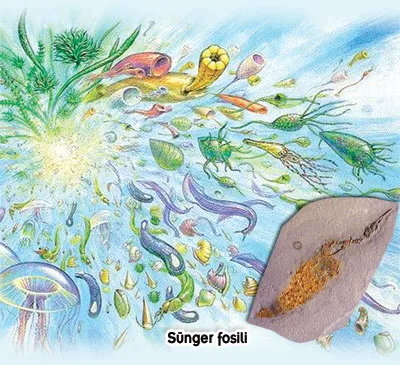
The worst impasse facing neo-Darwinism with regard to Cambrian life forms is the great cellular variety that suddenly emerged. Studies on present-day organisms reveal that the sponges that appeared in the pre-Cambrian would have required five different types of cell.136Accordingly, the even more complex life forms that appeared in the Cambrian must have possessed even greater number and variety of cells, because the different characteristics and functions in organisms always require the different functions of different cell types. New proteins also need new genetic information. Neo-Darwinism has to account for the formation of each one of these new cell types and proteins that appeared.
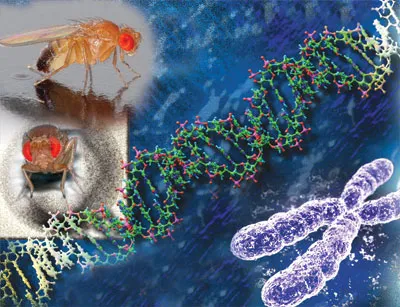
As we have seen earlier in the book, in order to maintain life, the minimally complex single-celled organism requires between 318 to 562 kilobase pairs of DNA. More complex single-celled organisms require 1 million base pairs. Therefore, ever-increasing coding instructions are needed for the production of the proteins necessary to give rise to any arthropod as complex as the trilobite.For example, the fruit fly Drosophila melanogaster, a present-day arthropod, requires around 180 million base pairs of DNA. For a single cell to develop into a colony requires a very serious increase in cellular variety and an enormous, error-free genetic variety.137
In order for multi-celled organisms to emerge from a single cell, therefore, enormous increases in specified genetic information are needed. At the same time, proteins—the product of the genes—must be arranged into high levels of organization. New types of cell require new proteins, which have to be organized into new systems within the cell. And these new cell types must be arranged into new tissues, organs and body systems, which, in turn, must be organized to form body plans and give rise to an organism—a trilobite, an elephant or a human being. Different components with different functions must be organized in the most perfect manner if that organism is to survive, much less thrive. For that reason, each of the new life forms that evolutionists expect to have appeared in these stages in the Cambrian must have exhibited a hierarchical organization in all respects, from the smallest component to all their fully functional features. An extraordinarily superior, functional and specified arrangement of all components must occur.
The appearance of multi-celled Cambrian life forms represents a problem for neo-Darwinists, who cannot explain any positive changes, functional differentiation and perfect organization of structure and functions in a single cell. Every detail of the complex body plans that emerged in the Cambrian explosion requires a separate explanation, but neo-Darwinists have no scientific explanation for any of them.
Stephen C. Meyer, who earned his Ph.D. in the History and Philosophy of Science from Cambridge University, sets out the emptiness and failure of neo-Darwinist claims:
In the second scenario, neo-Darwinists envisioned novel genes and proteins arising by numerous successive mutations in the preexisting genetic text that codes for proteins. To adapt Dawkins’s metaphor, this scenario envisions gradually climbing down one functional peak and then ascending another. Yet mutagenesis experiments again suggest a difficulty. Recent experiments show that, even when exploring a region of sequence space populated by proteins of a single fold and function, most multiple-position changes quickly lead to loss of function. Yet to turn one protein into another with a completely novel structure and function requires specified changes at many sites. Indeed, the number of changes necessary to produce a new protein greatly exceeds the number of changes that will typically produce functional losses. Given this, the probability of escaping total functional loss during a random search for the changes needed to produce a new function is extremely small—and this probability diminishes exponentially with each additional requisite change. Thus, Axe’s results imply that, in all probability, random searches for novel proteins (through sequence space) will result in functional loss long before any novel functional protein will emerge.138
Experiments performed in the early 1990s revealed that the probability of any short protein consisting of 100 amino acids forming at random is 1 in 1065.139The structures that appeared in the Cambrian require the existence of much more complex functional proteins, resulting from the combination of a much higher number of amino acids. Neo-Darwinists should be able to explain the formation of different proteins shaping the different cell types in all the species within the 50 phyla that appeared. Yet they are unable to account for even a single different cell type.
The evolutionist paleontologist Richard Fortey of London’s Natural History Museum expresses this fact in these words:
Even if evidence for an earlier origin is discovered, it remains a challenge to explain why so many animals should have increased in size and acquired shells within so short a time at the base of the Cambrian.140

Even assuming that these imaginary beneficial mutations did take place, another difficulty arises regarding natural selection—the second supposed evolutionary mechanism proposed by evolutionists. In order for new cell types to be functional, they must be closely coordinated with one another. This requires that all the systems giving rise to an organ must exist in perfect, efficient form at the same moment. According to the theory of evolution, functional advantages will be favored and passed along by the mechanism of natural selection, while non-functional proteins will not. Therefore, any given cell will be eliminated long before it has time to perform its task in a functional manner together with other cells. All this clearly shows that if both mechanisms—mutation and natural selection—are operative, then evolution cannot possibly come about.
The Japanese scientist Susomo Ohno elucidates this with various calculations in the journal Proceedings of the National Academy of Sciences:
Assuming the spontaneous mutation rate to be generous 10-9 per base pair per year and also assuming no negative interference by natural selection, it still takes 10 million years to undergo 1% change in DNA base sequences. It follows that 6-10 million years in the evolutionary time scale is but a blink of an eye. The Cambrian explosion denoting the almost simultaneous emergence of nearly all the extant phyla of the Kingdom Animalia within the time span of 6-10 million years can’t possibly be explained by mutational divergence of individual gene functions.141
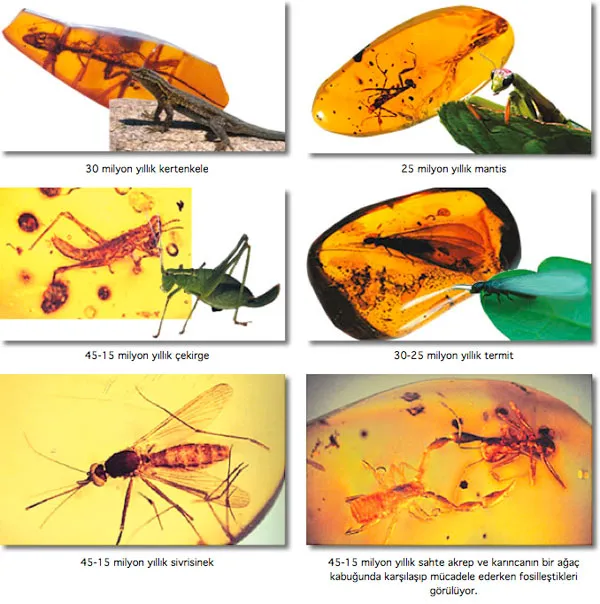
Stasis—in other words, stability in the fossil record—also refutes the gradual-evolution-through-mutations model propagated by neo-Darwinists. Specimens of organisms in the fossil record that existed millions of years ago are identical to their descendants alive today. According to stasis, living things emerge with the traces they have left behind in the fossil record with the same features they possess today or possessed in the recent past. The fossil record shows no intermediate forms and no change over the course of millions of years. This confirms that living things never undergo evolution and also constitutes one of the most serious blows to neo-Darwinism.
The evolutionist Peter G. Williamson, of the Harvard University Geology Department, sets this out in a paper in Nature magazine:
The principal problem is morphological stasis. A theory is only as good as its predictions, and conventional neo-Darwinism, which claims to be a comprehensive explanation of evolutionary process, has failed to predict the widespread long-term morphological stasis now recognized as one of the most striking aspects of the fossil record.142
After admitting that neo-Darwinism is not supported up by the fossil record, Stephen Jay Gould’s description of the theory’s position reads like an obituary notice:
[Neo-Darwinism] is effectively dead, despite its persistence as textbook orthodoxy.143
Neo-Darwinism, or the modern evolutionary synthesis, has been put forward simply to satisfy evolutionist requirements and to excuse their lack of evidence. It is another claim, another fairy tale, invented to account for the Cambrian explosion and keep alive the theory of evolution. In fact, a number of evolutionists are in complete agreement on this.
Dr. David Raup, a University of Chicago paleontologist and an evolutionist, sets out this fact:
“All of the authors of the neo-Darwinian theory which they formulated back in the thirties and forties are losing their influence. ... I predict that that whole concept will be thrown out in the next ten years, and a new theory will be devised to take its place. A new wave of thinking is sweeping the field.”What will be the new theory? Dr. Raup confessed, “I have no idea.”144