Reading time: ~8 min read
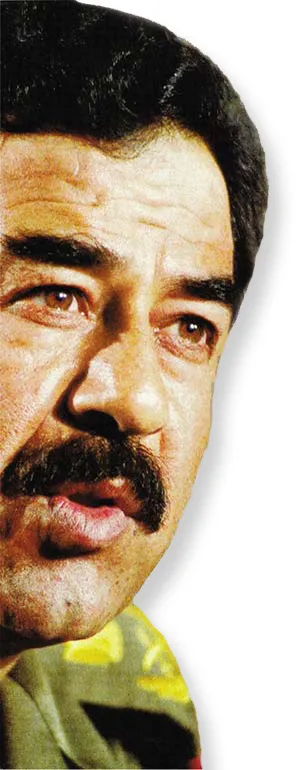
At this point in time, being the beginning of the 21st century, many of the fascist dictators of the 1960s and 70s have disappeared. However, fascism may rear its head at any time, in various places and under different conditions. The Middle East in particular has suffered from the violence of fascist regimes and organizations. One such fascist dictator is at this very moment threatening the region: Saddam Hussein.
It will be useful to examine Saddam Hussein's past in order to better recognize his fascist character.
The events that brought him to power in Iraq began with a military coup. In February 1963, a group of officers and street militants, calling themselves the Baath (Resurgence) Party, overthrew General Kassem who was then in power. Among these militants was one young member of the six-man team charged with killing Kassem: Saddam Hussein al-Takriti, or Saddam Hussein from Takrit. Although he was not a soldier, Saddam usually wore a military uniform, and after the coup, he was brought in by the Baath administration to head a group responsible for terrorism and murder. The first thing he did was to develop new and effective methods of torture with which to interrogate opponents of the coup. When the administration that followed the Baath's palace coup collapsed, in November of that same year, Saddam's torture facility was exposed, which was equipped with various implements of torture that Saddam had invented himself.
The Baath government lasted less than ten months, and was brought down by another coup. But the party carried out a second coup on July 17, 1968. This time the plotters remained in power.
The leader of this second Baath coup was "torture expert" Saddam Hussein. He brought in his personal relatives into key positions in the regime, and eventually gathered complete power by eliminating his rivals. The merciless torturer had become the dictator of Iraq.
After coming to power, Saddam pursued war and conflict constantly. In 1988 he engaged in a surprise and totally unjustified attack on Iran, occupying part of the country. The war lasted for eight years and cost the lives of hundreds of thousands of Iraqis and Iranians. Two years after the war had ended, he invaded Kuwait, again without justification, leading to the Gulf War. Like Hitler, who carried out savage attacks for four years to enlarge German territory, Saddam terrorized those around him.
Furthermore, he had no qualms about using the most oppressive methods against his own people. Throughout his rule, those regarded as opponents of the regime, and various political and ethnic groups, have suffered all kinds of repression. An edition of Newsweek described Saddam's fascistic character in the following manner:
His detractors call him a bloodthirsty tyrant—the Butcher of Baghdad. Saddam Hussein rules Iraq with an iron hand inside a steel glove, backed by a million-man Army and a legion of informers, assasins and torturers. Saddam, as he is known throughout the Middle East, is utterly ruthless in the pursuit of glory for himself and his country. He has not hesitated to use poison gas on enemies both foreign and domestic.135
Saddam has spilt the blood of numberless Iraqis. At the end of the war against Iran, 1 million out of Iraq's population of 17 million had either been killed or injured. More than 1 million people left the country for political and economic reasons. The human rights organization Middle East Watch states that many people were relocated or deported, arrested and punished for no reason, and that the use of torture was widespread, together with political executions and unsolved killings in Iraq. According to Amnesty International, torture, even of children, includes such methods as roasting victims over flames, amputating noses, limbs, breasts and sexual organs, and hammering nails into bodies.136
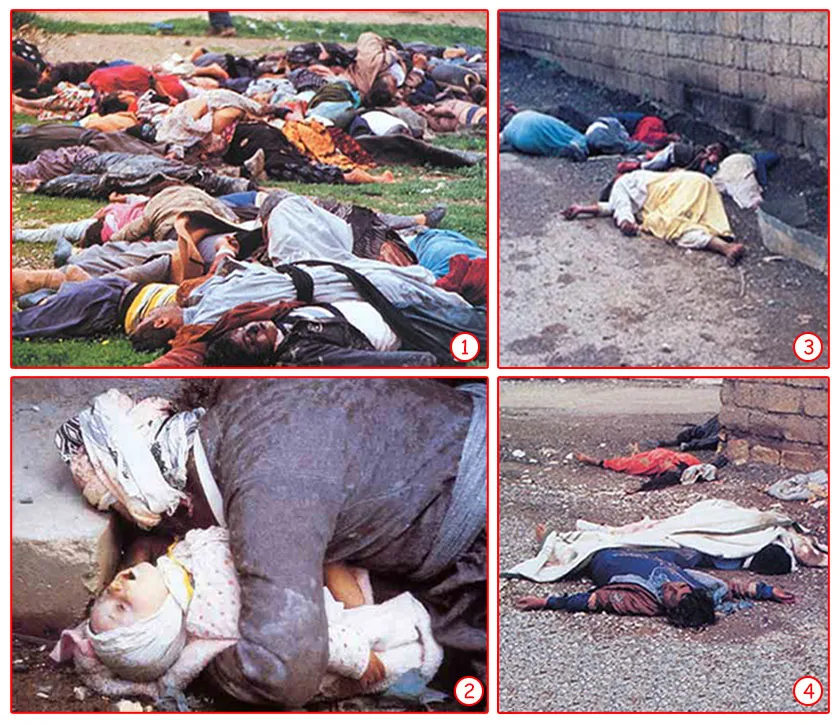
The atrocities carried out by Saddam at Halabja in 1988 demonstrate his fascistic treatment of people of different ethnic origins. Nerve gas was used against the Kurdish settlers, causing the death of many innocent men and women, including babies and the elderly. Amnesty International reported that 5,000 Kurds were killed in a single Iraqi gas attack on the village of Halabja, and many more thousands perished in similar attacks elsewhere in the country. 137
The torture inflicted on the political opponents of fascist Saddam was still worse. A doctor who fled from Iraq described: "I was an intern in a hospital in the South. Only doctors were allowed to see the people brought from prison. Most of them were no more than lumps of meat, and most of them died. No political detainee lived through the torture. I fled when I realised that I was about to be detained."138
Even Saddam's own family and closest associates were victims of his cruelty. His step-brother Barzan Takriti fled to the United Arab Emirates out of fear that Saddam and his son Uday were going to kill him. Two of Saddam's son-in-laws, Hussein and Saddam Kamel fled to Jordan out of fear of him. Saddam then guaranteed them that their lives would not be in danger, but as soon as the brothers returned to Baghdad, they and their father were killed. Later, their mother's body was found cut to pieces, all which happened before the eyes of the world.
The Iraqi leader also uses cruel methods as well to intimidate opponents who have fled the country. For instance, General Najib Salihi, who escaped to Jordan in 1995, reported that his close family were raped and that tapes of the act were sent to him. He also said that the same has been done to many other opponents of the regime.
As we can see from these numerous examples, Saddam's authority in Iraq is entirely based on intimidation, terror and torture, while the people within his fascist regime are hungry, unemployed and living in poverty. Little children are dying of hunger and lack of medicine, while the rest of the nation is doomed for either death or extinction. Despite all of this, the people will say nothing against Saddam, whether out of fear or from the effects of mass-hypnosis, but instead blame "them," Saddam's enemies, for the poverty they are suffering.
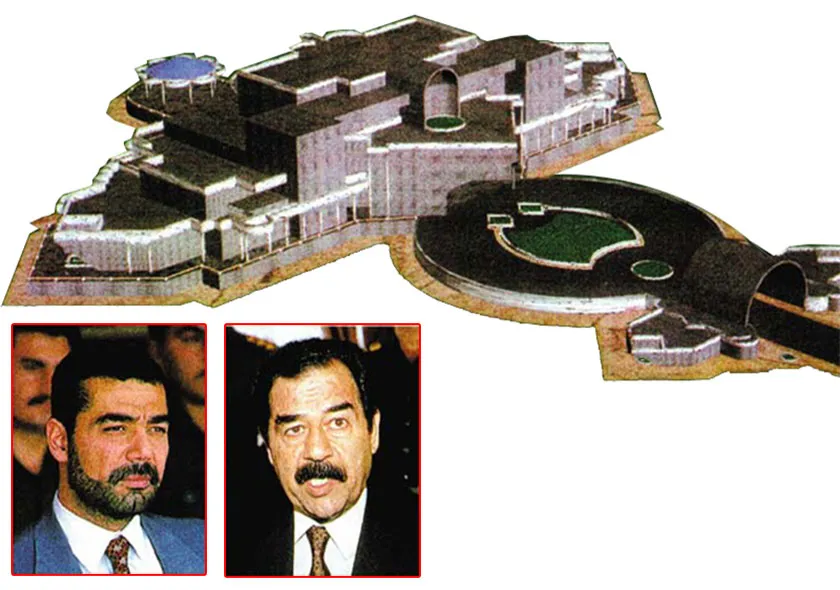
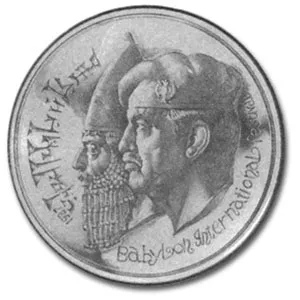
In Saddam, we can also discern several other fascist characteristics. Of these is the way he compares himself to pagan dictators of the past, just as the Nazis and other fascists had done. The "Sparta" that Saddam selected was Babylon, a pagan empire of the ancient Middle East. He sees and portrays himself as heir to the Babylonian King Nebuchadnezzar, who had "no opponents from horizon to sky."139 In Iraq, ceremonies are held symbolizing the resurrection of the Babylonian Empire, in a manner that recalls the pagan ceremonies of the Nazis. Nebuchadnezzar, who destroyed the temple of Solomon and carried the People of Israel to captivity in Babylon, is known to history for two characteristics, that of a ruthless commander, and a great architect. He was also filled with a pride bordering on the psychopathic. He had his name written on every one of the bricks used in the construction of the buildings he had erected. In direct imitation, and despite all the poverty and misery he inflicts on his people, Saddam has his name written on the bricks used to build the palaces he constructs so ostentatiously.
A great portion of the Iraqi people, however, have been so psychologically deformed by Saddam's fascism, that they do not see the construction of such palaces as a wrong or as an injustice to them. On the contrary, they regard these palaces, where Saddam lives in great luxury, as a matter of national honor, and something Iraq can display proudly to foreigners.
Another example of Saddam's fascist character is that, although he has no religious belief, he sometimes puts on a false facade of religion to use religion for his own political ends.
However, it is clear that the use of religious symbols for improper ends (such as to keep Saddam in power and spreading evil) is tremendous hypocrisy. The duty of the Iraqi people, and indeed of everyone, when faced with fascism, is not to be deceived by its propaganda methods, but to distinguish between the truly devout and the fascists who just pretend to be so, and to then act accordingly. It is not difficult to make out the difference between the two, because a fascist can never be truly devout.
In the Koran, God has this to say about these two-faced leaders who, through their power and ill-earned respect, deceive their people into complacency:
Among the people there is someone whose words about the life of the world excite your admiration, and he calls God to witness what is in his heart, while he is in fact the most hostile of adversaries. Whenever he holds the upper hand, he goes about the earth corrupting it, destroying crops and animals. God does not love corruption. When he is told to have fear of God, he is seized by pride which drives him to wrongdoing. Hell will be enough for him! What an evil resting-place! (Koran, 2:204-206)