
Reading time: ~3 min read
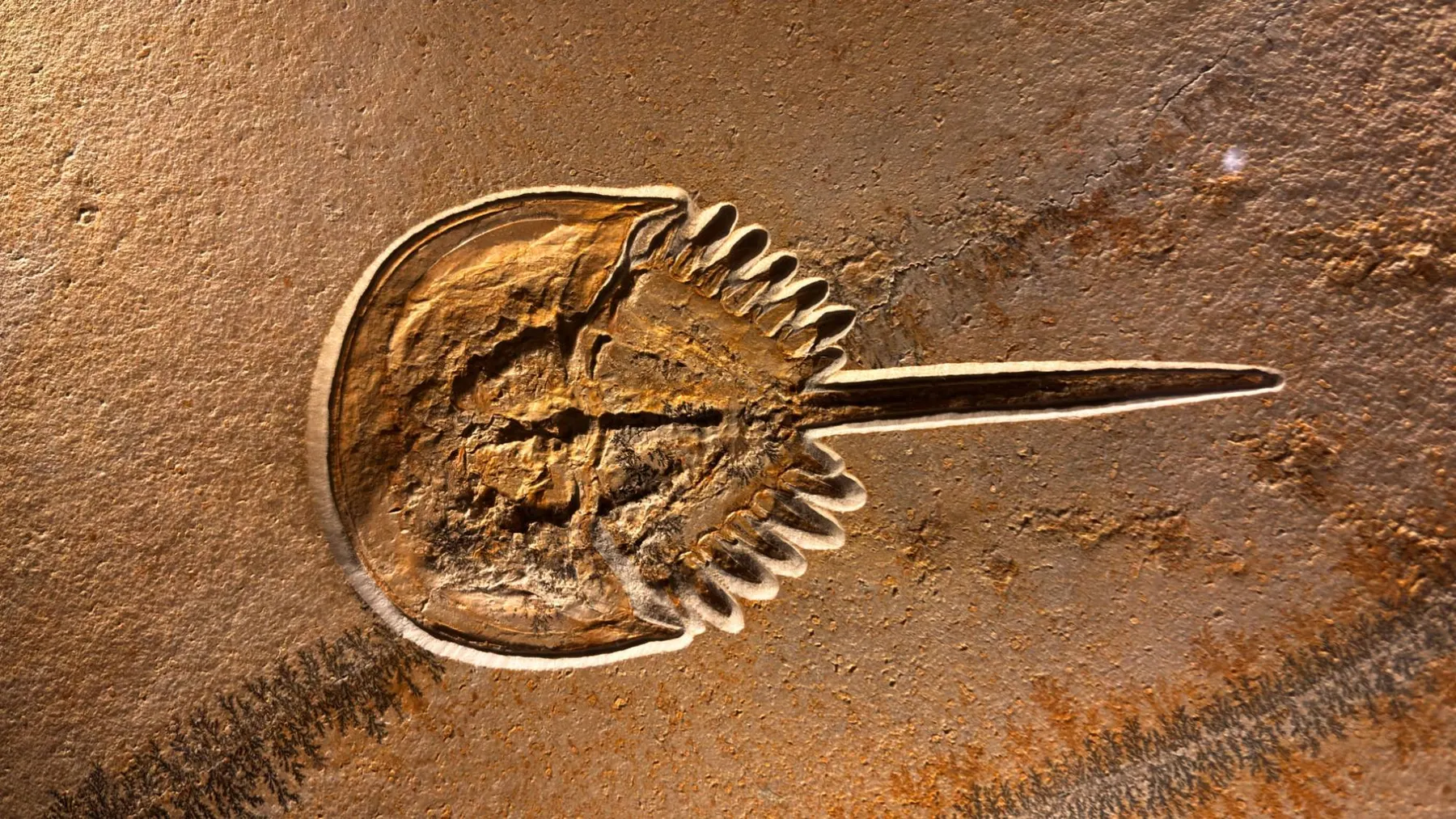
The remains or traces of a plant or animal preserved in the Earth's crust since ancient geological periods are called fossils. The word fossil comes from the Latin fossilis, meaning “dug up.” Fossils collected from every part of the world are the most important source of information about the living things that have inhabited the Earth since life began.
Under normal conditions, when an animal dies its remains disappear quickly. The dead creature is either removed by scavengers or broken down by microorganisms, so its remains leave no trace. Remains are preserved only under special circumstances.1 For this reason, only a tiny fraction of living things can be preserved as fossils after they die. As a rule, whether a dead organism can be fossilized depends on two conditions:
- It must be buried rapidly, so that it is protected from decay and from scavengers;
- Its body must have hard parts capable of fossilization.
Ever since Darwin's theory came to dominate the scientific world, paleontology (the science of fossils) has been conducted on the basis of this theory. Despite this, fossil excavations carried out in many different parts of the world have produced results that refute the theory rather than support it. Fossils show that different groups of living things appeared on Earth suddenly, each with its own distinctive structure — in other words, that they were created.
How Does a Fossil Form?
The most important and most favorable environment for fossil formation is clay and mud. When the material surrounding an organism that has fallen or been carried into such mud hardens, a true mold is formed. The organism itself usually decays and disappears, but the mold remains permanently. If minerals later fill this mold, a cast is formed that reproduces the general outline of the organism. When body parts are filled with mineral-rich water or with minerals alone, the process is called petrification. Sometimes this petrification is so perfect that even anatomical studies can be carried out on it.2
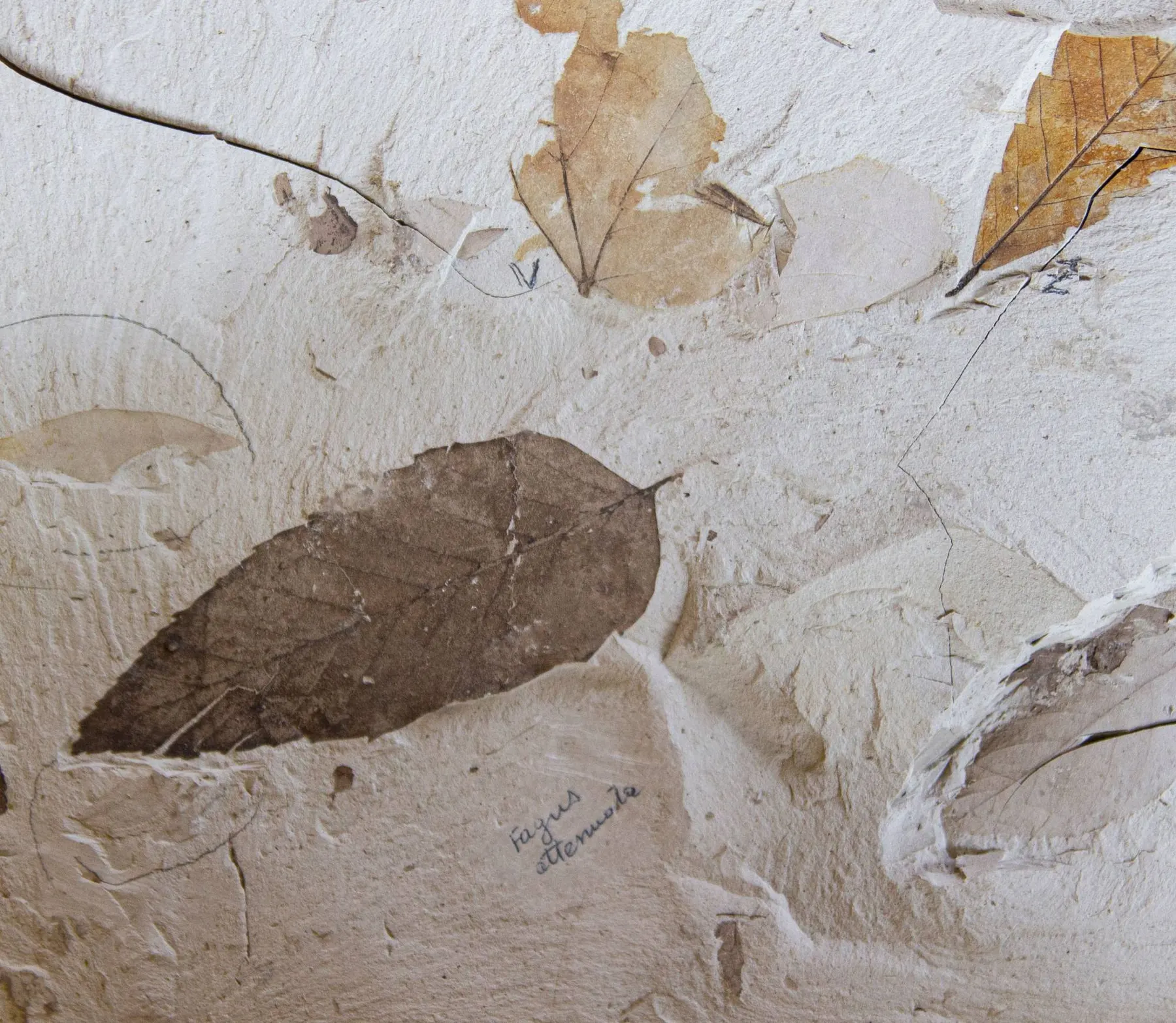
Fossils include not only the hard parts of living things (bones, teeth, shells and so on) but also molds bearing the traces of various organs and of life activity. From the shape of bones and the muscle attachments on them, it is even possible to understand how an animal stood and moved.3 The study of fossils also gives us information about extinct animals and plants, and shows which living things lived in which periods of time.
Fossils and the Claim of Evolution
Evolutionists regard fossils as very important for establishing kinship between them and today's living things and for showing similarities in processes of development. They turn to fossil remains in order to confirm their claim that living things descended from one another by evolving step by step. Yet although a vast fossil record has been uncovered to date, apart from a few fossils later shown to be frauds or distortions, they cannot put forward a single piece of evidence. On the contrary, the fossils in the Earth's strata confirm that living things have existed in flawless form ever since they were first created (see The Fossil Record).
The American paleontologist R. Wesson, in his book Beyond Natural Selection, published in 1991, explains that the gaps in the fossil record are real and factual:
The gaps in the record are real, however. The absence of a record of any important branching is quite phenomenal. Species are usually static, or nearly so, for long periods, species seldom and genera never show evolution into new species or genera but replacement of one by another, and change is more or less abrupt.4
References
- Bilim ve Yaşam Ansiklopedisi [Encyclopedia of Science and Life], Gelişim Yayınları, Istanbul, 1976, p. 4 ↩
- Prof. Dr. Ali Demirsoy, Yaşamın Temel Kuralları, Genel Biyoloji / Genel Zooloji [The Basic Rules of Life: General Biology / General Zoology], Vol. I, Part I, Ankara, 1993, pp. 629–630 ↩
- Prof. Dr. Ali Demirsoy, Yaşamın Temel Kuralları, Genel Biyoloji / Genel Zooloji, Vol. I, Part I, Ankara, 1993, p. 629 ↩
- R. Wesson, Beyond Natural Selection, MIT Press, Cambridge, MA, 1991, p. 45 ↩