

Reading time: ~5 min read
These two, who are currently continuing their research at Princeton University's department of Ecology and Evolutionary Biology, spent many years on Daphne Major, one of the tiny Galapagos Islands, studying the middle ground finch. They recorded the measurements of the beaks, wings and bodies of the birds they caught with the help of nets, and after attaching a special band to each one they set them free again. By 1977 they had marked the majority of the birds on the island, and almost all of them by 1980.
In this way they regularly monitored some 20,000 finches from generation to generation. The absence of human beings and predators on this island made the finches so tame as to be effectively domesticated. This made their work very much easier. In addition, Professor Grant and his wife regularly measured the amount of rain falling on the island.
Most research regarding Galapagos finches was carried out in the birds' natural habitat. Peter and Rosemary Grant and their assistants observed the birds under various climatic conditions and sought to identify the effects that alleged evolution had on them. Note that all the researchers involved in these studies believed that all living things are the result of evolution and had set to confirm, through their observations, this belief to which they were so devoted.
As for the climatic conditions on the Galapagos, there is usually a hot and rainy season between January and May, with the other months being cooler and drier. In addition, there may be wide variations between the initial and total amounts of rainfall in the hot, rainy season. Moreover, the atmospheric phenomenon known as El Niño takes place at irregular intervals every two and 11 years, and at different levels of intensity, also alters the climatic balances. At such times there is excessive rainfall; subsequent years are then generally dry and arid.
The level of rainfall is of vital importance to the ground finches that feed on seeds. In years of plentiful rain, ground finches can easily obtain the seeds they need to grow and breed. In years of drought, however, the plants on the islands may produce a limited and inadequate amount of seeds, as a result of which some finches starve.
Grant and his colleagues measured the rainfall on Daphne Major as normal in 1976, but counted only one-fifth of this amount a year later, in 1977. During the 18 months of drought from the middle of 1976 to January 1978, there was a significant drop in the quantity of seeds on the island and a major reduction in the numbers of ground finches. The population fell to 15% of the year before. They assumed that most of the other birds had died, and that a few had migrated.
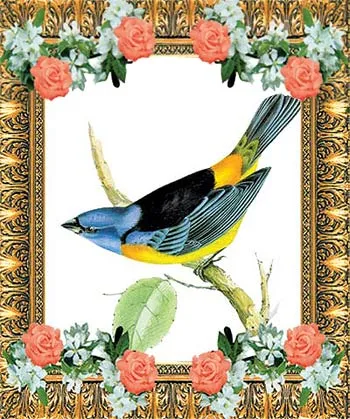
Grant and his team made another important observation, noting that the finches that survived the drought were rather larger than normal and had slightly wider beaks. The average beak of the ground finches on the island in 1977 was approximately half a millimeter deep, 5% greater than the average in 1976. (Beak depth is the distance between the topmost and lowest points where the beak joins the head.) Starting from this point, the researchers claimed that natural selection had separated out those finches feeding on seeds alone, and that those birds with beaks large enough to open large, hard seeds had managed to survive.
In an article in the October 1991 Scientific American, Peter Grant announced that this research offered direct evidence of evolution. According to him, 20 cases of selection were sufficient to turn a middle ground finch into a great ground finch. Assuming that drought occurred once every 10 years, this change could take place in as little as 200 years. Adding in a margin of error, Grant maintained that this transition could also last as long as 2,000 years—but that bearing in mind the length of time the birds had existed on the island, even this figure was very low. He suggested that natural selection would take longer to transform a middle ground finch into a cactus ground finch.232
Grant reiterated these claims in subsequent articles, insistently maintaining that the finches had confirmed Darwinism and was proof that natural selection, via environmental pressure, caused organisms to evolve.233
Evolutionist circles regarded these statements as a lifesaver. They were portrayed as evidence of evolution through natural selection, a process that had hitherto always been refuted by experiment and observation. The Grants' researches were made the subject of Jonathan Weiner's Pulitzer prize-winning book The Beak of the Finch. In that 1994 book, Weiner described this change in the beak as "the best and the most detailed demonstration to date of the power of Darwin's process."234 Again according to Weiner, the finch beak was an icon of evolution.235 With his book's publication, Peter and Rosemary Grant became heroes of Darwinism.
Indeed, Professor Grant and his team put in a lot of hard work and field research on the Galapagos, but failed to display the same care and attention in analyzing their results. They fell into a grave error because they set about evaluating their findings, not according to objective scientific logic, but in the light of their evolutionist preconceptions.
References
- Peter R. Grant, "Natural Selection and Darwin's Finches," Scientific American, October 1991, p. 82-87. ↩
- Peter R. Grant, B. Rosemary Grant, "Speciation and Hybridization of Birds on Islands," in Peter R. Grant (editor), Evolution on Islands, Oxford: Oxford University Press, 1998, pp. 142-162. ↩
- Jonathan Weiner, The Beak of the Finch, p. 9. ↩
- Ibid , p. 112. ↩