Reading time: ~4 min read
Today, the fictitious mechanism of punctuated equilibrium has been totally discredited in scientific terms. It has been proved that living things cannot evolve through the methods in question. As Jeffrey Levinton from the State University of New York has stated, there can be no way to test the theory of species formation in question if it cannot be seen clearly in the fossil record. On that basis, Levinton concluded that "the totality of the evidence makes it a theory not worth following up."48
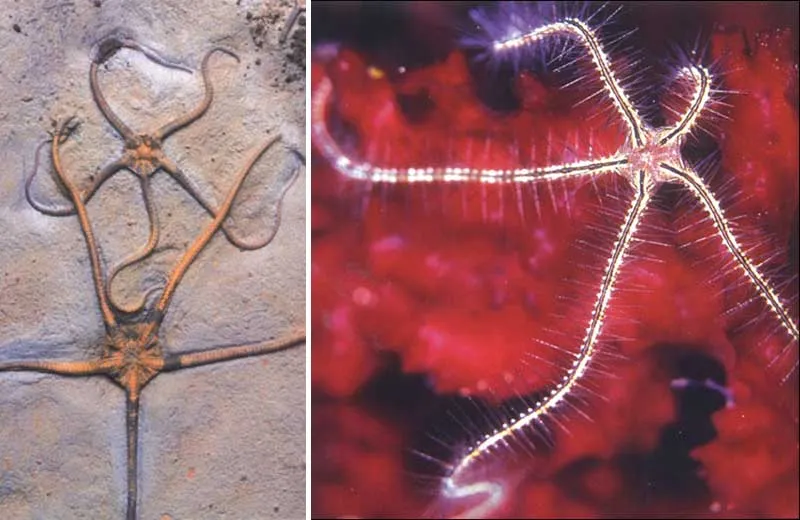
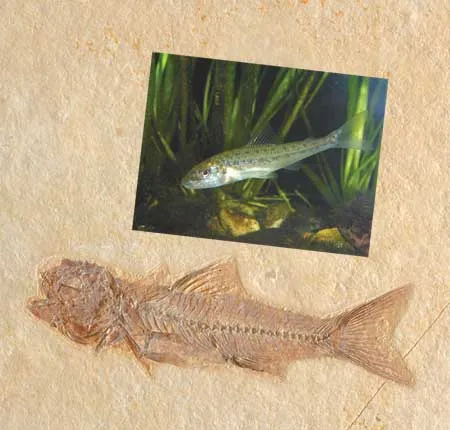
This is of course true. The claim constituting the foundation of the theory has been refuted scientifically. But the important fact is that the fossil record has provided no evidence for punctuated equilibrium; on the contrary, it has demolished it. Millions of fossils in the record have been in a state of "equilibrium" that the evolutionists claim to have lasted for millions of years, as punctuated equilibrium suggests. Yet for some reason, there is absolutely no trace of the intervening evolution that—again according to the theory—should have lasted for thousands of years, at least. The fossil record provides not one single example of the countless living things expected to have undergone evolution. Nor is there a single piece of evidence to show how punctuated equilibrium might work. As the result of their desperate situation, evolutionists try to take one of the greatest proofs of the fact of Creation and use it as a basis for evolution. This clearly demonstrates the terrible position they are in!
How did such an inconsistent theory ever become so popular? In fact, almost all the proponents of punctuated equilibrium are paleontologists, who clearly see how the fossil record refutes Darwinian theory.
This is why they are literally in a state of panic and trying to keep their theory viable at any cost.
On the other hand, geneticists, zoologists and anatomists perceive that no mechanism in nature could give rise to "punctuations," for which reason they insist on supporting the gradual Darwinist theory of evolution. The Oxford University zoologist Richard Dawkins strongly criticizes adherents of the punctuated model of evolution and accuses them of destroying the credibility of the theory as a whole.
This inconclusive dialogue between the two sides is actually evidence of the scientific crisis into which the theory of evolution has fallen.
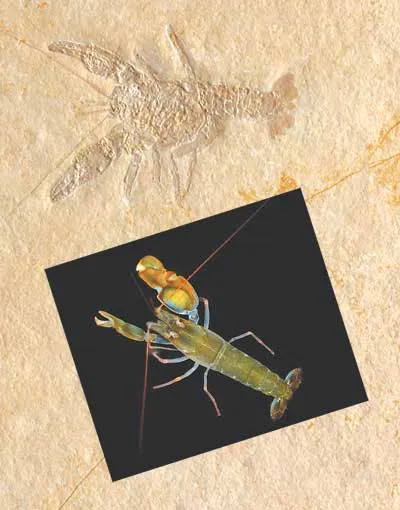
What we have is a myth that cannot be reconciled with any experimental, observational or paleontological findings. All evolutionist theoreticians look for grounds to support this myth, depending on their own field of specialization, but find themselves in conflict with findings from other branches of science. Attempts are sometimes made to gloss over this confusion by means of superficial comments such as "Science advances through such academic debates." Yet the problem is that these debates are not mental gymnastics performed for the sake of coming up with any true scientific theory, but are dogmatic conjecture intended to support a false theory. The fact that evolutionary theoreticians inadvertently reveal is that the fossil record cannot be reconciled with the concept of evolution in any way. And stasis, one of the most important elements in the fossil record, is clearly visible. Gould expresses this in these terms:
... stasis, inevitably read as absence of evolution, had always been treated as a non-subject. How odd though to define the most common of all palaeontological phenomena as beyond interest or notice!49
By now, all Darwinists have been forced to admit the fact of stasis in the fossil record, which they are still reluctant to see, deliberately pushing into the background and even refusing to accept as data. The lack of any documentation of fossils undergoing evolution—in other words, the absence of any intermediate forms—has done away with all speculation regarding stasis and clearly reveals this as one of the most significant proofs of the fact of Creation. Punctuated equilibrium has been totally discredited, both by the very mechanisms it proposes and by the fossil record, which it seeks to put forward as evidence.