

Reading time: ~2 min read
A chemical laboratory made up of elements we cannot see with the naked eye, that works non-stop and supports our survival, is present in all of nature. The bacteria we are considering in this chapter, each one of which is a miracle of creation, are expert chemists that make use of nature as a laboratory. A great many of the features of bacteria are still unknown because the size of these life forms, around 0.001 millimeters (3.93700787 × 10⁻⁵ inches), generally makes it impossible to study their internal structures properly. However, the available data still describe the systems in these life forms to us.
Bacteria are not primitive, as evolutionists like to claim. On the contrary, they possess complex systems that prove that they could not have come into being through a gradual process of evolution. There are many species of bacteria in nature, all with different characteristics.
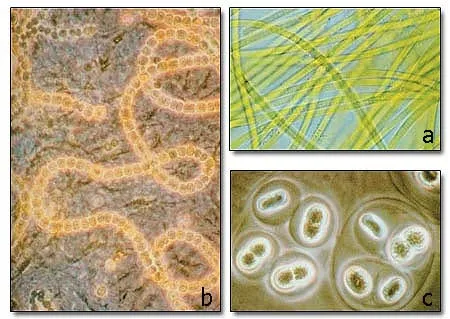
Cyanobacteria represent the most complex group of bacteria, which exhibit these different features. However, this description is still far from describing cyanobacteria’s characteristics and the wonderful functions they perform. Cyanobacteria possess very special cellular architectures and complex intra-cellular communications systems.
Even 3.9 billion years ago, cyanobacteria were marvelous and fully equipped life forms capable of making photosynthesis, carrying out nitrogen fixation (nitrogen that cannot be used in a gaseous form assuming the form of usable compounds), capable of movement without the bacterial whip (flagella) and using a string of proteins in order to make such motion possible.