

Reading time: ~5 min read
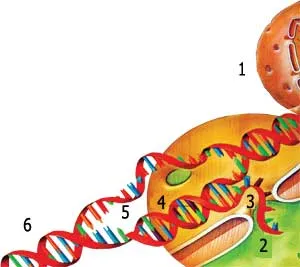
In cells, nucleic acids are found in two separate forms: DNA (short for deoxyribonucleic acid) and RNA (ribonucleic acid), which perform different tasks. The general differences between the two are as follows:
Their sugars are different:
The backbone of the RNA molecule is ribose sugar, instead of the deoxyribose sugar molecule in DNA.
The bases are different:
There is uracil (U) in RNA instead of the thymine (T) in DNA.
RNA is shorter and consists of just a single strip:
RNA is a polymer (a compound formed by a large number of molecules joining together with chemical bonds in a regular manner). It has a structural similarity to DNA and like DNA, it also carries information. But unlike DNA, RNA consists of a single strip.
DNA is a more stable molecule:
RNA has an extra oxygen atom in every sugar molecule and lacks one carbon atom in every thymine base. The absence of oxygen in DNA's sugar molecules –that is, the fact that DNA has a deoxyribose sugar structure-makes it a more stable molecule than RNA. For that reason, DNA is the ideal molecule for information storage and is far better suited to the long– term storage of data in the cell. Indeed, it is DNA's task to carry information that ensures the survival of the organism and the continuation of subsequent generations. The RNA molecule plays temporary roles and serves in the short-term carrying of information. 80
RNA enters into reactions faster:
In addition, since RNA has an extra hydroxyl (OH) group, it enters into reactions more easily than DNA, but which also makes it less stable. This is why RNA is not as well suited as DNA for storing information. Thanks to the way that the single-strip RNA molecule can adapt to complex three-dimensional structures, it's able to engage in catalytic activities that the strong and double-striped DNA helix cannot perform. (A catalytic effect enables a substance to undergo no change, but to effect in a chemical reaction or the speed at which it does so.) Thanks to their catalytic abilities, RNA molecules can alter chemical structures in a most astonishing manner. For example, during the processes in the cell nucleus, they turn a large copy of the DNA sequence into a "messenger RNA" sequence much smaller than themselves. The ribosome then converts messenger RNA into the protein's amino acid sequence.81
The information in DNA can be reached more easily:
If the RNA molecule had a double-helix structure like that of DNA, the structural folds in RNA would not occur, which would prevent its being recognized by proteins. Also a double-helix structure would give, RNA with a deep recess, making it harder for proteins to reach it and for its coded information to be read.82 Proteins could not recognize a double-helix RNA and its base sequences as easily as they do with DNA. Therefore, DNA is better suited for containing genetic information because it is more stable and more easily reached.83
DNA and RNA are the ideal molecules for their own separate tasks.
RNA carries the genetic message it receives from the DNA inside the nucleus to the cytoplasm (that part of the cell that lies outside the nucleus), where the message is translated. The essential differences between these two molecules help them perform their separate tasks. DNA is a stable and approachable data-preservation center inside the cell, while RNA is a variable carrier that enables genetic information to be translated. In his book Nature's Destiny, the molecular biologist Michael Denton notes the importance of these properties:
... the evidence suggests that any change would be detrimental and no other polymers are known which posses precisely the chemical and physical properties of DNA and RNA.84
RNA, with its single strip, is much more flexible than DNA's double helix. As you see, both the DNA and RNA molecules have been specially created for their own functions. The differences in their structures may seem very minor, but are actually exceedingly important in terms of the jobs they perform, and all these details form a highly complex organization. Prof. Gerald L. Schroeder refers to the complexity in the DNA-RNA mechanism:
One basic cell structure, one basic energy source, one set of organelles common to all life. And one system for regulating this unity, the DNA-RNA team that takes individual lifeless raw materials and organizes them into living, thinking, choosing beings. The complexity in the commonness stretches the imagination. 85
No human being has any influence on this system. Our Almighty Lord installed this system, too small to be seen with the naked eye, while the individual was still no more than one single cell. Human beings, enfolded by the mercy of Allah, stand in need of Him in all things:
Say: "He is Allah, Absolute Oneness, Allah, the Everlasting Sustainer of all. He has not given birth and was not born. And no one is comparable to Him." (Surat al-Ikhlas, 1-4)