

Reading time: ~4 min read
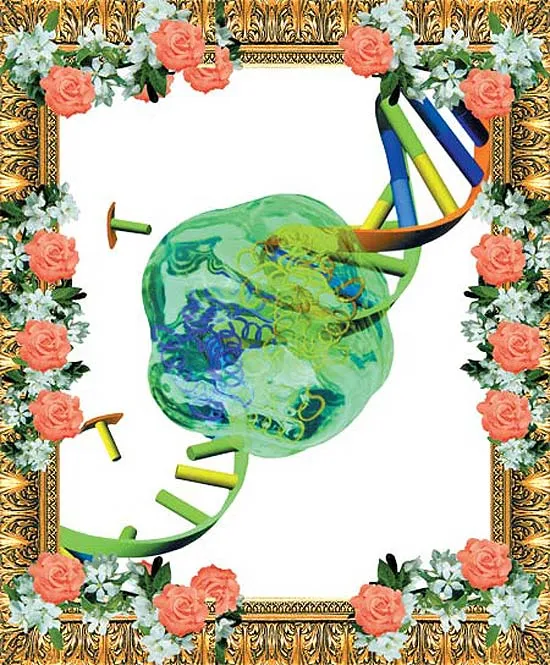
All living things consist of cells, the most complex structures that science has yet encountered. Cells are the building blocks of life, and the cell's data bank is the DNA molecule. An amazing quantity of information is recorded in the DNA molecule, which is far too small to be seen with the naked eye. For example, in the single DNA molecule of a single human cell, there is enough information to fill an encyclopedia consisting of millions of pages. This giant data bank is encoded using four special bases, known as nucleotides. There are around a million nucleotide pairs and a thousand genes in a bacterium's cell, and between 1 and 10 billion nucleotide pairs and tens of thousands—or even a few hundred thousands—of genes in a plant or animal cell.
Every species' DNA has a different nucleotide sequence—in other words, a different genetic structure. In addition, the data sequence in the DNA molecule is different in every individual of a particular species.
Obviously, in addition to the spectacular species diversity on Earth, there is also an unbelievable genetic diversity. That is the reason why all the millions of species that have ever lived on Earth and all their individual members are so very different to one another. There are wide variations within species, whose individuals possess genetic characteristics appropriate to their environments.
Thanks to their superb genetic wealth, plant and animal species have been improved over thousands of years: Breeds with desired characteristics are obtained by cross-breeding different varieties of many cereals, fruits, vegetables, plants and animals. For example, breeders employ special mating programs in order to obtain sheep and cattle that give the best wool, meat or milk. They obtain new strains by mating cattle with high meat and milk productivity but with poor resistance to natural conditions with others with low meat and milk productivity, but which are more resistant.123
Crops such as wheat, rice and corn, indispensable parts of our daily lives, have also been improved thanks to their innate genetic diversity. High-productivity varieties that are resistant to disease, climatic conditions and drought have been obtained by crossbreeding wild plant species. For example, it was recently observed that Zea diploperennis, a species of Mexican wild corn, possessed resistance genes to seven viruses that cause disease.124 The genetic structure of this wild corn is worth billions of dollars a year.125 Resistance to a deadly virus carried by the genes of one African species of wild barley and resistance to disease in a species of wild Asian sugar cane have been used to increase the productivity of domestic varieties. One species of wild tomato discovered in the Andes has been used to increase the sugar content of other domestic tomatoes.126 According to World Resources Institute statistics, genetic diversity was the main reason for a two-fold increase in the rice, barley, wheat, cotton and sugar cane harvest in the United States between 1930 and 1980, as well as a three-fold increase in tomatoes, and a four-fold increase in potatoes and maize.127
Contrary to the distortions made by certain circles who seek to use biodiversity to further their own ideologies, it has absolutely nothing to do with the fictitious theory of evolution. Proponents of evolution try to portray the variations and genetic diversity in nature as evidence, by misleading those who have little information on the subject of biology. However, genetic diversity within a species consists of the exchange of biological information already possessed by members of that species to produce offspring with new genetic combinations. Therefore, no new genes nor any new species emerges as a result of genetic variation. Species are always the same species, because their genes are always the same. Existing genes are merely brought together in different combinations, which has nothing at all to do with any supposed process of evolution.
Genetic diversity is one of the most important links in Earth's complex ecological chain. Paul Ehrlich, Professor of Biology at Stanford University, explains:
Aside from nuclear war, there is probably no more serious environmental threat than the continued decay of the genetic variability of crops.128
Most advances in the fields of agriculture and biotechnology have been made possible thanks to the boundless scope of biodiversity. As Professor Ehrlich says:
Natural ecosystems maintain a vast genetic library that has already provided people with countless benefits and has the potential for providing many, many more. 129