

Reading time: ~8 min read
Evolutionists maintain that the first single-celled organism emerged billions of years ago from inorganic substances, and that the glorious diversity of life on Earth, emerged over the course of hundreds of millions of years. Note that according to the Darwinist claim, millions of species formed from one single species under the influence of natural processes and coincidence. As this irrational and unscientific claim shows, the formation of species—that is, speciation—represents the basis of the theory of evolution. It is particularly clear that a claim not based on concrete evidence, observations and scientific research is of no value at all. Darwinism's claim that one species turned into millions of other species is a huge one that requires countless amounts of evidence and findings. In fact, though, there is not a single piece of scientific evidence for evolutionists' claims regarding speciation ever since the time of Darwin, evolutionists have produced a conceptual confusion and depict variations as evidence for speciation.
First let's consider the concept of species to get a better understanding of the evolutionist deception. Descriptions have been produced by various experts from different biological fields. As put by Troy Wood and Loren Rieseberg of Indiana University, "Evolutionary biologists have proposed a diverse, almost innumerable list of species concepts…"194
Biologist John Endler explains the complication as follows:
Species are "tools that are fashioned for characterizing organic diversity" (Lewin,1979). Just as there are a variety of chisels made for different purposes, different species concepts are best for different purposes; and just as it is inadvisable to use a carving chisel to cut a mortise, problems arise when one species concept is used when it is inappropriate. Confusion and controversy have often resulted because different people working with different groups of organisms mean different things by "species."195
Ali Demirsoy, one of Turkey's most prominent exponents of Darwinism, expresses the truth of the matter this way:
The question of by what bounds the species, the basic unit in the classification of plants and animals, should be separated from other species—in other words, "Species Definition"— is one of the most difficult for biology to answer. It appears impossible in the present state of our knowledge to give a definition of the species that applies to all plant and animal groups.196
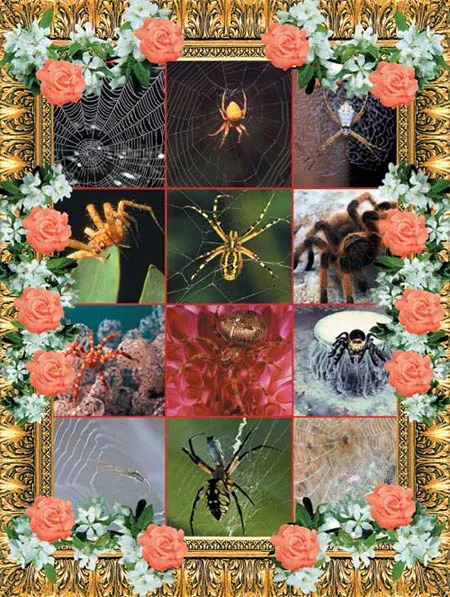
Mention the word species, and most people will think of life forms such as dogs, horses, spiders, dolphins, wheat or apples. However, biologists define the concept of species in a rather different way. In modern-day biology, a living species in the most general sense consists of a population of individuals able to mate and reproduce with one another. This definition divides life forms that we generally speak of as if they were one single species into a number of different ones. For example, some 34,000 species of spiders have been described.197
To better understand the evolution deception regarding speciation, we first need to define geographic isolation. Within any living species, there will be differences stemming from genetic variation. If geographical obstacles such as a mountain chain or river arise between individuals of a species, and if they become isolated from one another, then in all likelihood, within these two separated groups, different variations will begin to dominate.198
Assume that in one group (variation A), darker skin and longer fur begin to predominate; and that another group (variation B) has shorter fur and lighter color. The longer the two populations remain separated from one another, the sharper variations A and B will become.199 Variations like these, with clear morphological differences despite their belonging to the same species, are known as subspecies.
At this point, the speciation claim enters the picture. Sometimes, after variations A and B have split away from one another due to geographic isolation and are brought back together again, their members are unable to interbreed with one another. Since they cannot mate, they cease being subspecies, according to the biological definition, and become separate species. This is known as speciation.
Evolutionists take this concept and extrapolate it "Look! There is speciation in nature. In other words, new species emerge through natural mechanisms. So all species must have come into being in this same way." In fact, however, a serious deception is being perpetrated here, because important points are being overlooked or ignored:
1) Variations A and B, after being isolated from one another, may be unable to mate when reunited again. Yet this phenomenon generally stems from mating behavior. In other words, individuals belonging to variations A and B regard each other as foreigners by the other, and thus feel no inclination to mate with others that they perceive as different—even thouigh there is no genetic incompatibility to prevent it. In terms of genetic information, they all remain members of the same species. (For this very reason, the concept of species remains a subject of debate in biology.)
2) The really important factor is that this speciation means a loss of genetic information, rather than an increase. The two variations have separated, but the reason for their division is not that either one has acquired any new genetic data. Neither variation has acquired any proteins or new enzymes, much less a new organ. There is no development here. On the contrary, instead of a previous population that contains different, possibly recessive, pieces of genetic information (using our example, a population with both long and short fur, and dark and light coloration), there are now two populations that is each relatively impoverished in terms of genetic data.
Therefore, nothing about speciation provides any support for the theory of evolution. Because it claims that all living species developed by chance, from the simple to the more complex, therefore, in order for the theory of evolution to be taken seriously, it needs to demonstrate mechanisms that can increase genetic information. The bifurcation of an existing species because of a loss of genetic variation, obviously, a different phenomenon entirely.
Evolutionists actually admit this lack of relevance. For that reason, evolutionists describe examples of variations within a species, and speciation by division into two populations (as you saw in the previous section) as micro-evolution—in the sense of variation within a species that already exists. However, the use of the word "evolution" in the term is deliberately misleading, because no evolutionary process is happening at all. The situation consists of only various combinations and distributions of genetic information already existing in that species' gene pool.
Then how did living types first emerge? How did the five kingdoms—monera, protista, fungus, plant and animal—emerge on Earth? How did the higher categories—the phyla, classes, orders, families; and for that matter, such basic categories as mammals, birds, vertebrates and crustaceans—first appear? These are the questions that evolutionists need to address.
As already stated, evolutionists refer to these subjects as macro-evolution, which is actually what they mean by the theory of evolution, because the genetic variations that Darwinists insist on calling "micro-evolution" are biological phenomena that everyone can observe and agree on. And no matter how much evolutionists employ the term evolution in describing such phenomena, they actually have nothing to do with evolution at all. On the other hand, the macro-evolution claim, has no supporting evidence, either in biological observations or in the fossil record.
People lacking sufficient information on the subject may well fall into the error of thinking that "Since micro-evolution takes place in a very short space of time, macro-evolution could take place over tens of millions of years." Some evolutionists fall into the exact same error or seek to make use of it to convince others of the truth of their theory. All the so-called proofs of evolution proposed by Charles Darwin in The Origin of Species are of that kind, as are the examples put forward by later evolutionists. In their examples, they seek to use as evidence for their theory the genetic variety that they describe as micro-evolution but which actually has nothing at all to do with what they describe as macro-evolution.
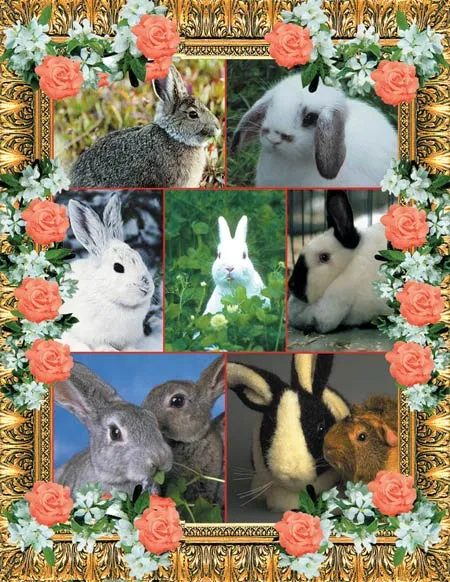
Despite all this discussion of micro- and macro-evolution and speciation, living things appeared on Earth as types with their own different structures (as is confirmed by the fossil record). Different variations and subspecies may appear within them, thanks to the richness of their gene pools. For example, there are rabbits that exhibit variations such as white fur, grey fur, longer or shorter ears, and these variations become more pronounced in a given environment, depending on which natural conditions support them most appropriately. But species never turn into other species. There is no natural mechanism that can effect this, that can design new types and develop the new organs, systems and body plans they require. Every species has been created with its own unique structures. And since God has created every one of them with a potential for variety, a wide but finite variation often emerges within each type.
References
- Troy E. Wood, Loren H. Rieseberg, "Speciation: Introduction", Encyclopedia of Life Sciences, 1999, ğ.els.net ↩
- J.A. Endler, "Conceptual and Other Problems in Speciation,", in D. Otte, J.A. Endler (editors), Speciation and Its Consequences, Sunderland, Massachusetts: Sinauer Associates,, 1989, p. 625. ↩
- Prof. Dr. Ali Demirsoy, Yaşamın Temel Kuralları, Vol. I / November I, 11th ed., Ankara: Meteksan Yayınları, , 1998, p. 624. ↩
- M. Encarta Encyclopedia 2001 Deluxe Edition CD, "Spider (arthropod)." ↩
- Timothy A. Mousseau, Alexander E. Olvido, "Geographical Variation," Encyclopedia of Life Sciences, 2000, ğ.els.net. ↩
- The same also applies to human beings. The different races on Earth have different characteristics due to their geographic isolation. Dark skin came to predominate in one race and since these people lived in the same region and reproduced among themselves, a black-skinned race came into being. The same applies to oriental races. The differences in question (skin color, eye color and shape, height, hair color, etc.) were present in the genetic information of the first human beings, but some of these characteristics gradually came to predominate in human populations in different regions of the world, and different races emerged accordingly. Were it not for geographic isolation, if all the races on Earth had intermarried for centuries, then everyone would be a "cross-breed," there would be no blacks, whites or orientals. All human beings would be an "average" of these features. ↩