

Reading time: ~19 min read
Evrim teorisi aslında daha ilk aşamada, yani yeryüzündeki ilk canlı yaşamın nasıl ortaya çıktığı sorusunda cevapsız kalmaktadır. Evrim, bu soru karşıTo the question of how life on Earth originally emerged, the theory of evolution has no answers to give, even right from the very beginning of the debate. Evolutionists claim that life began with one single cell that came into being by chance. According to this scenario, under the effects of lightning and earthquakes, various inanimate substances entered into a reaction in the primordial atmosphere of some 4 billion years ago, thus giving rise to the first cell.
This scenario cannot be true, because life is far too complex to have emerged in any chance manner. Even the very smallest organism has literally millions of biochemical components that interact with it, each one of them vital for the organism to survive at all.
W. H. Thorpe, an evolutionist scientist admits as much: "The most elementary type of cell constitutes a 'mechanism' unimaginably more complex than any machine yet thought up, let alone constructed, by man."98 It is absolutely impossible for the components of this exceedingly complex system to form all at once, in the right place, at the right time, in total compatibility with one another.
It is also impossible for such a complex system to have come into being gradually, as Darwin maintained, because it can function only when all its parts are ready and operative. More primitive stages would serve no purpose at all. Indeed, the thesis that inanimate substances can combine together in such a way as to give rise to life is an unscientific one that has never been verified by any experiment or observation. On the contrary, all the scientific findings show that life can only originate from life.
No one on Earth, not even in the most advanced laboratories, has ever managed to combine inanimate substances and produce a living cell. Let alone the cell, they have failed to produce even a single one of the hundred thousands of proteins of the cell. Darwinists are speechless in the face of single protein.
While things stand this way, the evolutionists nevertheless maintain that the living cell-which cannot be replicated as the result of human intelligence, science and technology-assembled itself under the conditions on the primeval Earth.
Evolutionists themselves confess the meaninglessness of this claim. Various evolutionists have explained, with the use of different analogies, the impossibility of life appearing spontaneously from inanimate matter:
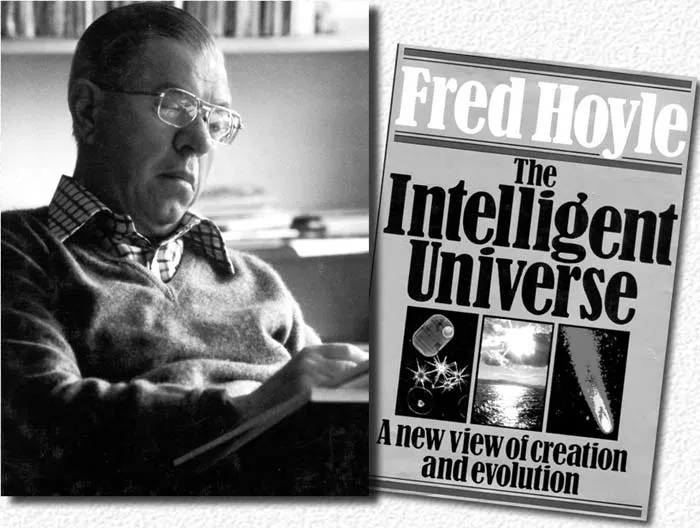
Prof. Fred Hoyle, an English astronomer and mathematician:
A junkyard contains all the bits and pieces of a Boeing 747, dismembered and in disarray. A whirlwind happens to blow through the yard. What is the chance that after its passage a fully assembled 747, ready to fly, will be found standing there? So small as to be negligible, even if a tornado were to blow through enough junkyards to fill the whole Universe.99
At all events, anyone with even a nodding acquaintance with a Rubik's cube will concede the near-impossibility of a solution being obtained by a blind person moving the cubic faces at random. Now imagine 1,050 blind persons each with a scrambled Rubik's cube, and try to conceive of the chance of them all simultaneously arriving at the solved form. You then have the chance of arriving by random shuffling of just one of the many bio-polymers on which life depends. The notion that not only the bio-polymers, but the operating program of a living cell could be arrived at by chance in a primordial organic soup here on the Earth is evidently nonsense of a high order. Life must plainly be a cosmic phenomenon.100
If there were a basic principle of matter which somehow drove organic systems toward life, its existence should easily be demonstrable in the laboratory. One could, for instance, take a swimming bath to represent the primordial soup. Fill it with any chemicals of a non-biological nature you please. Pump any gases over it, or through it, you please, and shine any kind of radiation on it that takes your fancy. Let the experiment proceed for a year and see how many of those 2,000 enzymes [proteins produced by living cells] have appeared in the bath.
I will give the answer, and so save [you] the time and trouble and expense of actually doing the experiment. You will find nothing at all, except possibly for a tarry sludge composed of amino acids and other simple organic chemicals. How can I be so confident of this statement? Well, if it were otherwise, the experiment would long since have been done and would be well-known and famous throughout the world. The cost of it would be trivial compared to the cost of landing a man on the Moon...101
Prof. Fred Hoyle and Chandra Wickramasinghe is a professor of applied mathematics and astronomy at Cardiff University:
... troops of monkeys thundering away at random on typewriters could not produce the works of Shakespeare, for the practical reason that the whole observable universe is not large enough to contain the necessary monkey hordes, the necessary typewriters, and certainly the waste paper baskets required for the deposition of wrong attempts. The same is true of living material... One to a number with 1040.000 noughts after it... is big enough to bury Darwin and the whole theory of evolution. There was no primeval soup, neither on this planet nor on any other, and if the beginnings of life were not random, they must therefore have been the product of purposeful intelligence.102
Prof. Malcolm Dixon, a British biochemist, at the University of Cambridge:
Enzyme systems are doing every minute what battalions of full-time chemists cannot. . Can anyone seriously imagine that naturally occurring enzymes realized themselves, along with hundreds of specific friends, by chance? Enzymes and enzyme systems, like the genetic mechanisms whence they originate, are masterpieces of sophistication. Further research reveals ever finer details of design.103
Prof. Michael Pitman is the Chief Scientist of Australia:
There are perhaps, 1080 atoms in the universe, and 1017 seconds have elapsed since the alleged 'Big Bang.' More than 2,000 independent enzymes are necessary for life. The overall probability of building any one of these polypeptides can hardly be greater than one in 1020. The chance of getting them all by a random trial is one in 1040000, an outrageously small probability that could not be faced even if the whole universe consisted of organic soup.104
Prof. Ali Demirsoy is a biologist at Hacettepe University:
In essence, the probability of the formation of a cytochrome-C sequence is as likely as zero. That is, if life requires a certain sequence, it can be said that this has a probability likely to be realized once in the whole universe. Otherwise some metaphysical powers beyond our definition must have acted in its formation. To accept the latter is not appropriate for the scientific cause. We thus have to look into the first hypothesis.105
William Stokes, an American evolutionist and geologist:
[Protein] would not occur during billions of years on billions of planets, each covered by a blanket of a concentrated watery solution of the necessary amino acids.106
Andrew Scott is an evolutionist biochemist and science writer:
Take some matter, heat while stirring and wait. That is the modern version of Genesis. The 'fundamental' forces of gravity, electromagnetism and the strong and weak nuclear forces are presumed to have done the rest.... But how much of this neat tale is firmly established, and how much remains hopeful speculation? In truth, the mechanism of almost every major step, from chemical precursors up to the first recognizable cells, is the subject of either controversy or complete bewilderment.107
Dr. Christian Schwabe is professor of biochemistry and molecular biology at the Medical University of South Carolina:
Molecular evolution is about to be accepted as a method superior to paleontology for the discovery of evolutionary relationships. As a molecular evolutionist, I should be elated. Instead, it seems disconcerting that many exceptions exist to the orderly progression of species as determined by molecular homologies: so many in fact, that I think the exception, the quirks, may carry the more important message.108
Prof. Cemal Yıldırım is a Turkish evolutionist, and professor of philosophy at Middle East Technical University:
One suggestion made in order to prove that life cannot appear by chance is the unbelievably low probability of a functional enzyme emerging. A typical enzyme consists of 100 amino acids. Since there are 20 kinds of amino acid, we are looking at 20,100 possible combinations The possibility of a specific enzyme forming by chance in a single step from among so many possible combinations is 1 in 10130. The point that is ignored is that molecular kinetics are not random, and that functional enzymes appear all the time.109
Prof. Dr. Ali Demirsoy is a biologist at Hacettepe University:
An enzyme consists of an average of 100 amino acids. The number of possible combinations of an enzyme consisting of 100 amino acids of 20 different types is 20100. Bearing in mind that the total number of atoms in the universe is 1080, and that the number of seconds that have gone by since the formation of the universe is 1016, one can better appreciate how low the odds of an enzyme with a specific sequence forming really are. So how did enzymes emerge?110
Scientific American is a well-known American scientific magazine with strongly pro-evolution views:
Even the simpler molecules are produced only in small amounts in realistic experiments simulating possible primitive earth conditions. What is worse, these molecules are generally minor constituents of tars: It remains problematical how they could have been separated and purified through geochemical processes whose normal effects are to make organic mixtures more and more of a jumble. With somewhat more complex molecules, these difficulties rapidly increase. In particular, a purely geochemical origin of nucleotides [the subunits of DNA and RNA] presents great difficulties.111
Prof. Chandra Wickramasinghe is professor of applied mathematics and astronomy at Cardiff University and director of the Cardiff Center for Astrobiology:
The likelihood of the spontaneous formation of life from inanimate matter is one to a number with 40,000 noughts after it... It is big enough to bury Darwin and the whole theory of evolution. There was no primeval soup, neither on this planet nor on any other, and if the beginnings of life were not random, they must therefore have been the product of purposeful intelligence.112
Carly P. Haskings is an evolutionist biologist. The following is excerpted from an article published in American Scientist magazine:
But the most sweeping evolutionary questions at the level of biochemical genetics are still unanswered. How the genetic code first appeared and then evolved and, earlier even than that, how life itself originated on earth remain for the future to resolve... Did the code and the means of translating it appear simultaneously in evolution? It seems almost incredible that any such coincidence could have occurred, given the extraordinary complexities of both sides and the requirement that they be coordinated accurately for survival. By a pre-Darwinian (or a skeptic of evolution after Darwin), this puzzle would surely have been interpreted as the most powerful sort of evidence for special creation.113
Alexander I. Oparin is a Russian evolutionist biochemist at Moscow University and director of Moscow's A. N. Bakh Institute:
Unfortunately, however, the problem of the origin of the cell is perhaps the most obscure point in the whole study of the evolution of organisms.114
Loren Eiseley, anthropologist:
To grasp in detail the physio-chemical organization of the simplest cell is far beyond our capacity.115
Prof. Dr. Ali Demirsoy is a biologist at Hacettepe University:
In essence, no satisfactory explanation for the development of groups of cells with very different structures and functions has yet been provided.116
Prof. Dr. Klaus Dose is president of the Johannes Gutenberg University Biochemistry Institute in Germany:
More than 30 years of experimentation on the origin of life in the fields of chemical and molecular evolution have led to a better perception of the immensity of the problem of the origin of life on Earth rather than to its solution. At present, all discussions on principal theories and experiments in the field either end in stalemate or in a confession of ignorance.117
In spite of many attempts, there have been no breakthroughs during the past 30 years to help to explain the origin of chirality in living cells.118
Dr. David A. Kaufman of University of Florida:
Evolution lacks a scientifically acceptable explanation of the source of the precisely planned codes within cells, without which there can be no specific proteins and hence, no life.119
Jeffrey Bada is professor of marine chemistry at the San Diego State University:
Today, as we leave the twentieth century, we still face the biggest unsolved problem that we had when we entered the twentieth century: How did life originate on Earth?120
Hoimar Von Ditfurth, a German physician and scientific journalist:
Our present knowledge shows that the general principle of the universe does not apply here; there is no question of a primitive cell gradually turning into one with a nucleus and organelles.121
The cell has to have exactly the right amount of enzymes from the moment it is born- in other words, before it comes into direct contact with the oxygen in the atmosphere. Is it really possible for such a compatibility to have emerged solely by chance? Thinkers who answer that question are divided into two groups. To say Yes, it is possible, is like a confirmation of belief in modern science. Adopting a more pessimistic viewpoint, we may say that the non-supporter of modern science has really no alternative but to reply Yes. Because such a person will have the intention of coming up with an explanation by way of comprehensible natural phenomena and to produce these on the basis of natural laws without the assistance of any supernatural interventions.
But at this point, accounting for what has happened in terms of natural laws, and therefore coincidences, shows that the person in question has been backed into a corner.
If we wish to account for a single cell, capable of behaving compatibly with oxygen, forming in a moment in exactly the required form, and to account not just for that significant event but also the way that such a complex chemical reaction is essential for the survival of life on Earth, then what alternative have we other than to shelter behind the idea of coincidence?..
But the accumulation of coincidences that serve a specific purpose brings our credibility into question.122
... In the absence of a plan setting out where and when construction is to commence and in what order the various projects will be brought together, even the best blueprint will serve no purpose. We know that if we are dealing with a building, we need to start with the foundations and move onto the roof once the walls have been finished. We cannot move on to the plastering before the wiring and plumbing are completed. Every building site has a time frame to which construction work adheres, in addition to the construction blueprint.
This also applies to what nature builds, and of course to cells. However, we know next to nothing about this before-and-after relationship in the ordering of the cell. Biologists have still been unable to find who told the cell what part of the blueprint to build, and when. How it is that some genes are cut off at just the right moment, how the embargoes on some genes are lifted, and who instructs the suppressor genes and those that lift such suppression are all questions shrouded in darkness and waiting to be answered...123
When we look back, we see that there is no call for surprise at the total failure to find those transitional forms, so long almost painfully sought. Because in all probability, such a stage never took place. Our current knowledge shows that the general principle of evolution does not apply here, and that there is no question of the primitive cell gradually turning into one with a nucleus and organelles.124
Keith Graham:
We find that the same elements that supposedly created life in the beginning still exist today. Why can't they then produce life again?125
David E. Green is an American biochemist at University of Wisconsin, Madison and Robert F. Goldberger is professor emeritus of biochemistry and molecular biophysics and former provost of Columbia University:
The popular conception of primitive cells as the starting point for the origin of the species is really erroneous. There was nothing functionally primitive about such cells. They contained basically the same biochemical equipment as do their modern counterparts.126
W. Ford Doolittle is professor emeritus in Department of Biochemistry and Molecular Biology in Dalhouse University:
Molecular phylogenists will have failed to find the “true tree” not because their methods are inadequate or because they have chosen the wrong genes, but because the history of life cannot properly be represented as a tree.127
Prof. Dr. Ali Demirsoy is a biologist at Hacettepe University:
Complex cells never developed from primitive cells by a process of evolution.128
Dr. Alfred G. Fisher, who is an evolutionist, mentions in the fossil section of Grolier multimedia encyclopedia:
Both the origin of life and the origin of the major groups of animals remain unknown.129
Prof. Dr. Ali Demirsoy:
In fact, the probability of the random formation of a protein and a nucleic acid (DNA-RNA) is inconceivably small. The probability against the emergence of even a particular protein chain is astronomic.130
One of the most difficult stages to be explained in evolution is to scientifically explain how organelles and complex cells developed from these (supposedly) primitive creatures. No transitional form has been found between these two forms. One- and multicelled creatures carry all this complicated structure, and no creature or group has yet been found with organelles of a simpler construction in any way, or which are more primitive. In other words, the organelles carried forward have developed just as they are. They have no simple and primitive forms.131
The heart of the problem is how the mitochondria have acquired this feature, because attaining this feature by chance even by one individual, requires extreme probabilities that are incomprehensible... The enzymes providing respiration and functioning as a catalyst in each step in a different form make up the core of the mechanism. A cell has to contain this enzyme sequence completely, otherwise it is meaningless. Here, despite being contrary to biological thought, in order to avoid a more dogmatic explanation or speculation, we have to accept, though reluctantly, that all the respiration enzymes completely existed in the cell before the cell first came in contact with oxygen.132
However, there is a major problem here. Mitochondria use a fixed number of enzymes during the process of breaking (with oxygen). The absence of only one of these enzymes stops the functioning of the whole system. Besides, energy gain with oxygen does not seem to be a system which can proceed step by step. Only the complete system performs its function. That is why, instead of the step-by-step development to which we have adhered so far as a principle, we feel the urge to embrace the suggestion that, all the enzymes (Krebs enzyme) needed to perform the reactions of the mitochondria entered a cell all at once by coincidence or, were formed in that cell all at once. That is merely because those systems failing to use oxygen fully, in other words, those systems remaining in the intermediate level would disappear as soon as they react with oxygen.133
There is a very important point that needs to be clarified here. Prof. Demirsoy says that the probability of mitochondrial enzymes entering the cell by chance is very small. The probability is in fact zero (mathematicians regard probabilities lower than 1 in 10 followed by 50 zeroes as nil). There is therefore no place for enzymes to come into being by coincidence, by combining together at the right time and place by chance and co-operating to produce a function of such perfection that it exceeds the comprehension of the human mind.
Harold F. Blum is professor of biology at Princeton University:
The spontaneous formation of a polypeptide of the size of the smallest known proteins seems beyond all probability.134
Britannica Encyclopedia of Science, which is known to be pro- evolution, states that the amino acids of all living organisms on earth, and the building blocks of complex polymers such as proteins, have the same left-handed asymmetry. It adds that this is tantamount to tossing a coin a million times and always getting heads. The same encyclopedia states that it is impossible to understand why molecules become left-handed or right-handed, and that this choice is fascinatingly related to the origin of life on earth.135
Wendell R. Bird is the author of The Origin of Species Revisited:
This unique sequence represents a choice of one out of 102,000,000 alternative ways of arranging the bases! We are compelled to conclude that the origin of the first life was a unique event, which we cannot be discussed in terms of probability.136
Evolutionist George Gaylord Simpson is profess or of zoology at Columbia University:
Above the level of the virus, the simplest fully living unit is almost incredibly complex. It has become commonplace to speak of evolution from amoeba to man, as if the amoeba were the simple beginning of the process. On the contrary, if, as must almost necessarily be true, life arose as a simple molecular system, the progression from this state to that of the amoeba is at least as great as from amoeba to man.137
Prof. Michael Pitman is chief scientist of Australia and foreign secretary of the Australian Academy of Science:
Time is no help. Bio-molecules outside a living system tend to degrade with time, not build up. In most cases, a few days is all they would last. Time decomposes complex systems. If a large 'word' (a protein) or even a paragraph is generated by chance, time will operate to degrade it. The more time you allow, the less chance there is that fragmentary 'sense' will survive the chemical maelstrom of matter.138
John Maynard Smith and Eors Szathmary:
[accounting for the origin of this system remains] perhaps the most perplexing problem in evolutionary biology, because the existing translational machinery is at the same time so complex, so universal and so essential that it is hard to see how it could have come into existence or how life could have existed without it.139