

Reading time: ~4 min read
Darwinism lies behind a great many dangerous intellectual trends, ideologies and practices that have persisted down to the present day. It is most interesting that it constitutes a foundation shared by ideologies that are completely opposed to one another. Darwinism played a role in the birth and spread of Nazism, fascism and communism, in the alleged justification of racist and communist massacres, and also constituted the alleged scientific basis for “unrestrained capitalism.” In Victorian Britain and America, in particular, Darwinism received great acclamation and was hugely strengthened because of the support it offered to ruthless capitalists known as the “robber barons.”

Savage capitalism's most important error is in putting no limit on the extent to which weaker businesses (and weaker individuals) can be crushed, exploited and eliminated. No doubt this cruelty and ruthlessness are totally unacceptable. Today this error is summed up in the saying, “Big fish eat little fish.” In other words, small enterprises are eliminated—or acquired—by larger ones. That is Darwinism applied to the world of business.
During the 20th century, the world tried two main different economic models: the liberal one, based on private property and free intervention; and the socialist one, based on state property and a planned economy. Socialist economies failed in every country, inflicting poverty and misery on their societies. Liberal economics, on the other hand, displayed unquestioned success, bringing greater well-being to individuals and societies.
But by itself a liberal economy is not enough to bring well-being to a whole society. Thanks to the liberal economy, a society's economic well-being generally rises, but not everyone can enjoy his share of that increase. The poor remain poor, and the danger of social injustice begins to increase. To prevent that danger and to eliminate social injustice, two things are necessary:
1) The state must extend a hand to the down-and-out and the unemployed, as a requirement of the concept of the “social state” and take measures to help them.
2) Feelings of cooperation and solidarity, that religious moral values require, need to pervade society as a whole.
The second requirement is particularly important because in the end, it tends to define the first. If a society attaches powerful importance to religious and moral values, then the liberal economy that society implements will provide both economic development and social justice. The rich will use part of their acquired capital to help the poor and establish social programs to support the weak. (Indeed, this is the economic model revealed by God in the Qur'an. Private property does exist in Islam, but its owners are charged to use part of their assets, in the form of alms, to assist the poor and those in need.)
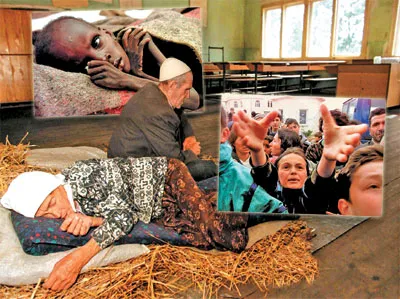
If a society undergoes moral degeneration, then the liberal economy turns into “savage capitalism” in which the poor and down-and-out are oppressed and receive no help at all, in which there are no social welfare programs, and where social injustice is regarded not as a problem but as a “natural” state of affairs.
The economic model we shall be criticizing here is not the liberal economy—the free economic model based on private property and competition—but savage capitalism.
The source of inspiration behind it, as we shall show in due course, is Social Darwinism.
Those who first brought Darwinist practices into the business world were the Americans known as the “robber barons.” They believed in Darwinism and thought that its claim regarding “the survival of the fittest” somehow justified their own ruthless practices.18 The result was the start of a ruthless competition in business, capable of ending even in murder. The robber barons' sole aim was to make even more money and gain even more power. They had no interest in social well-being, even for their own workers. Millions of lives were ruined when Darwinism entered the economy, causing extremely low wages, appalling working conditions, and long working hours. The lack of any safety precautions caused workers to fall ill, become injured, or even die.
References
- Jerry Bergman, "Darwin's Influence on Ruthless Laissez Faire Capitalism," March 2001; http://www.icr.org/pubs/imp/imp-333.htm ↩