
Source: ScienceAlertReading time: ~3 min read
Until recently, monarch butterflies (Danaus plexippus) were the best-known long-distance travelers among butterflies. They are famous worldwide for their annual migration of about 5,000 kilometers from North America to Mexico. Recent research, however, has revealed another butterfly species that rivals the monarch in distance.
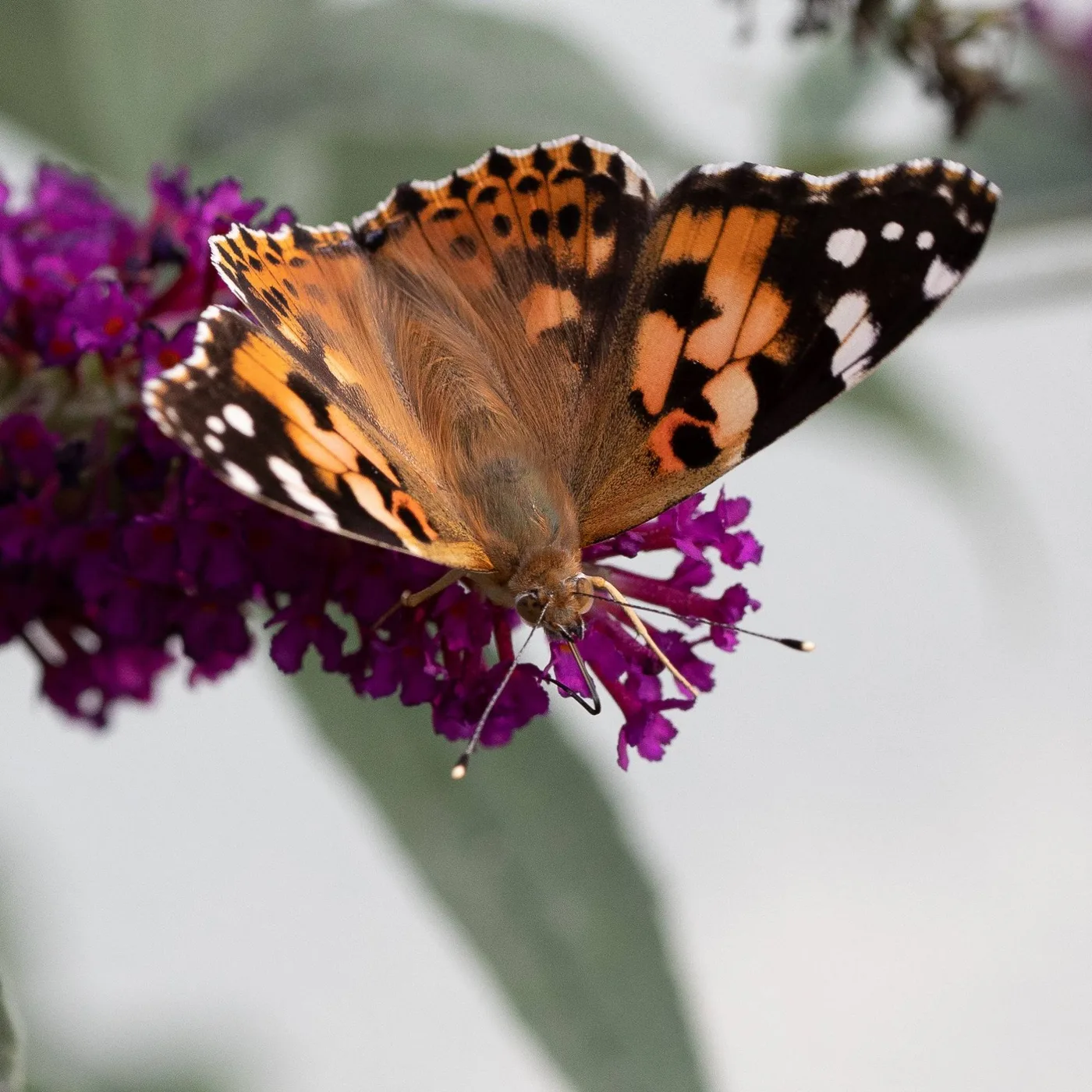
These were painted lady butterflies (Vanessa cardui), which make long journeys between Europe and Africa every year. Because tracking devices cannot be fitted to these butterflies, the researchers analyzed the DNA of pollen grains found on them — and it turned out that the pollen belonged to plants that grow only in the Sahel region of Africa.1
This result showed that the butterflies had flown across the Atlantic Ocean. Moreover, isotopes in the wings of the painted ladies found in French Guiana suggested that they had been born in Western Europe — meaning the distance was even greater than thought. The swarm had traveled more than 7,000 kilometers in a single lifetime and visited at least three continents.
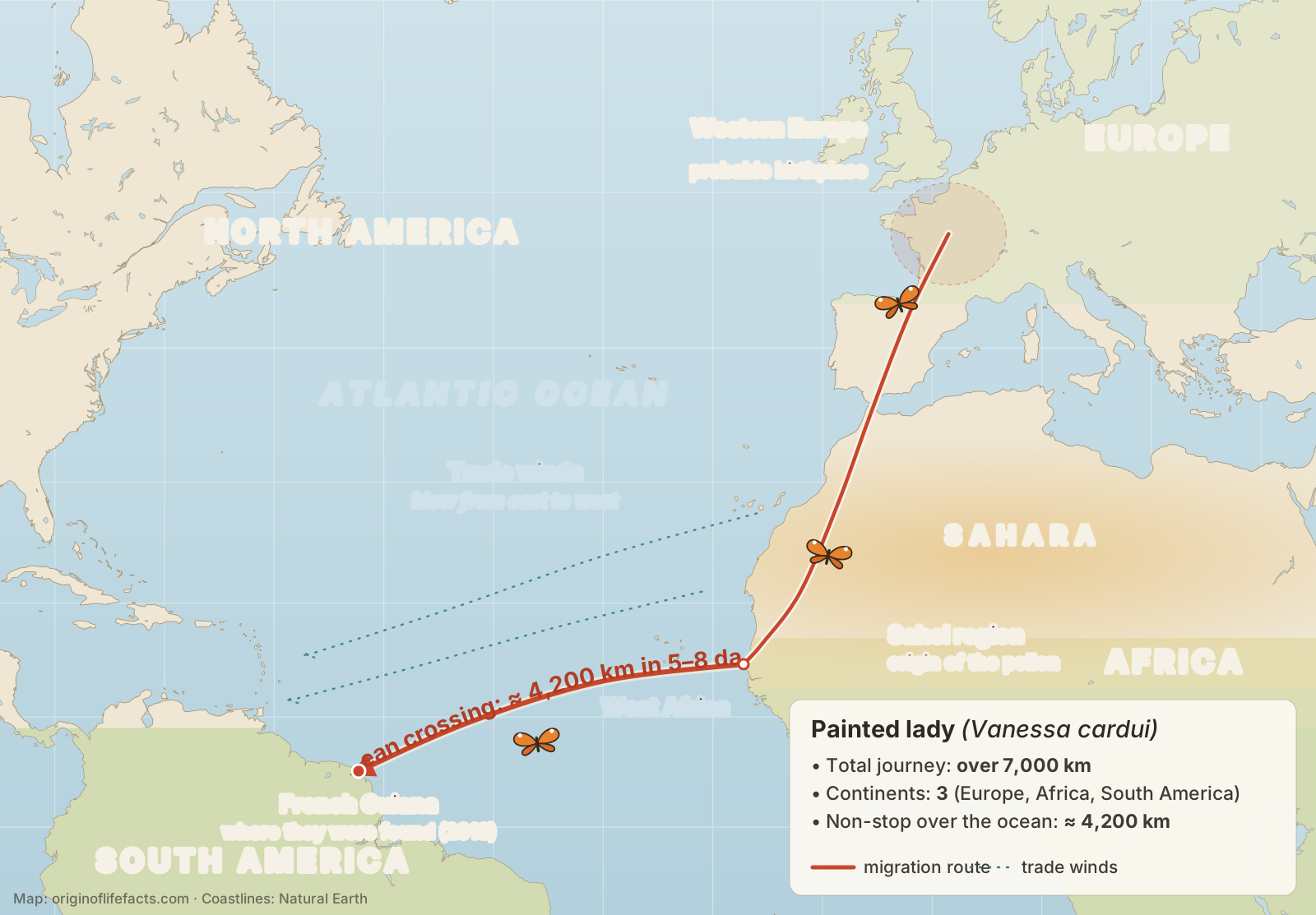
Given how delicate butterflies are, this is of course an enormous distance — but there is another important detail. Long migrations from Europe to Africa or from North America to Central America are impressive, yet along the way there are plenty of places where the butterflies can stop and refuel. Crossing an ocean is far more difficult.
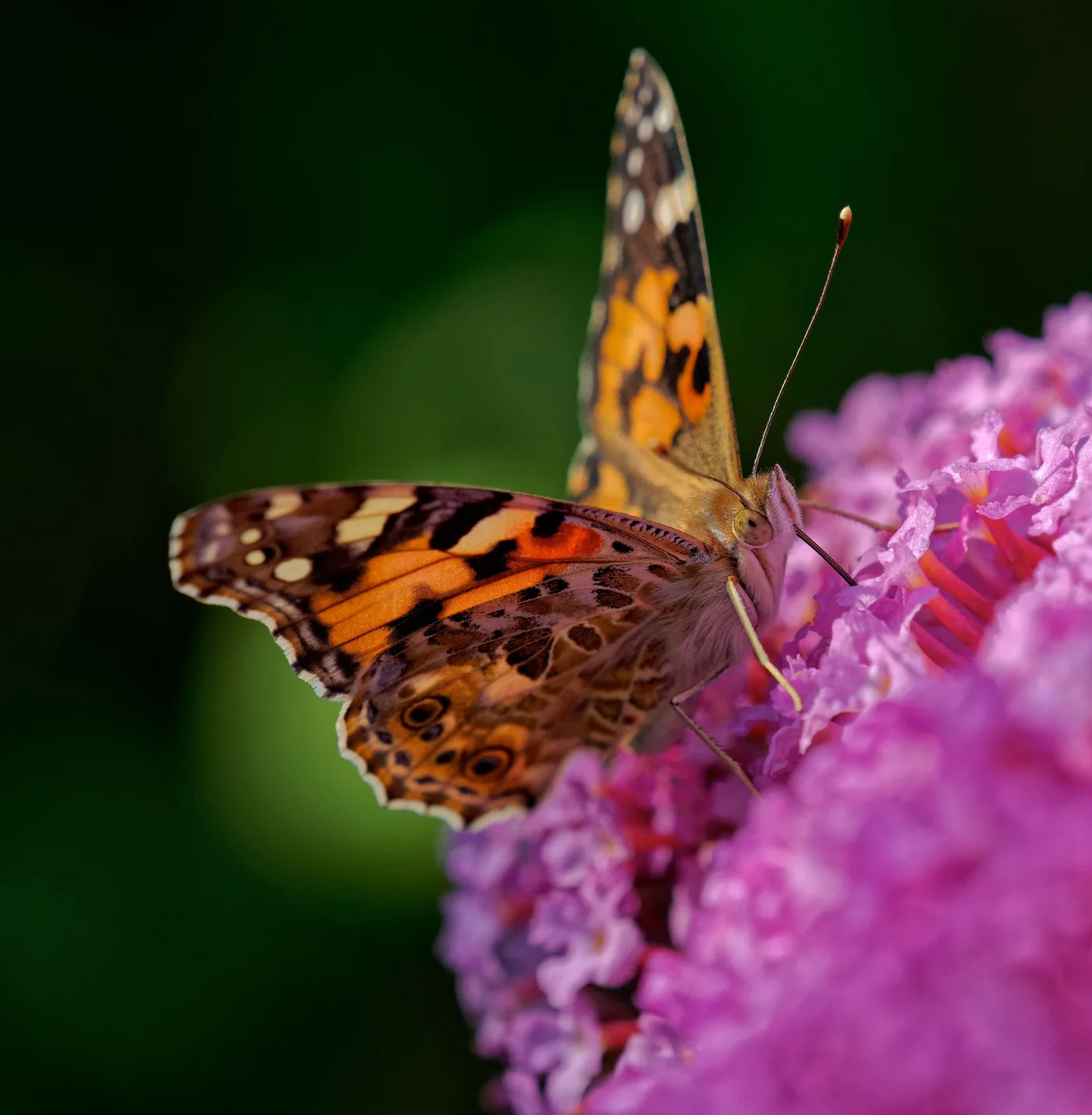
A painted lady's wings are the size of a little finger and its brain the size of a pinhead, yet it is a very fast flier. Its small size is an advantage: it can glide on the wind, sometimes reaching speeds of 48 kilometers per hour.
Over the Atlantic, strong winds blow from the Sahara toward the tropical Caribbean. They are stronger than experts had thought and can carry large dust particles as far as 3,500 kilometers. The painted ladies, famous for their delicacy, ride these strong winds, beating their wings very little and using a gliding technique to fly enormous distances.
Whether the long-distance fliers are monarchs or painted ladies, both of these delicate species are superb migrants. Every year they complete journeys out of all proportion to their fragile bodies. Let us stop and think for a moment:
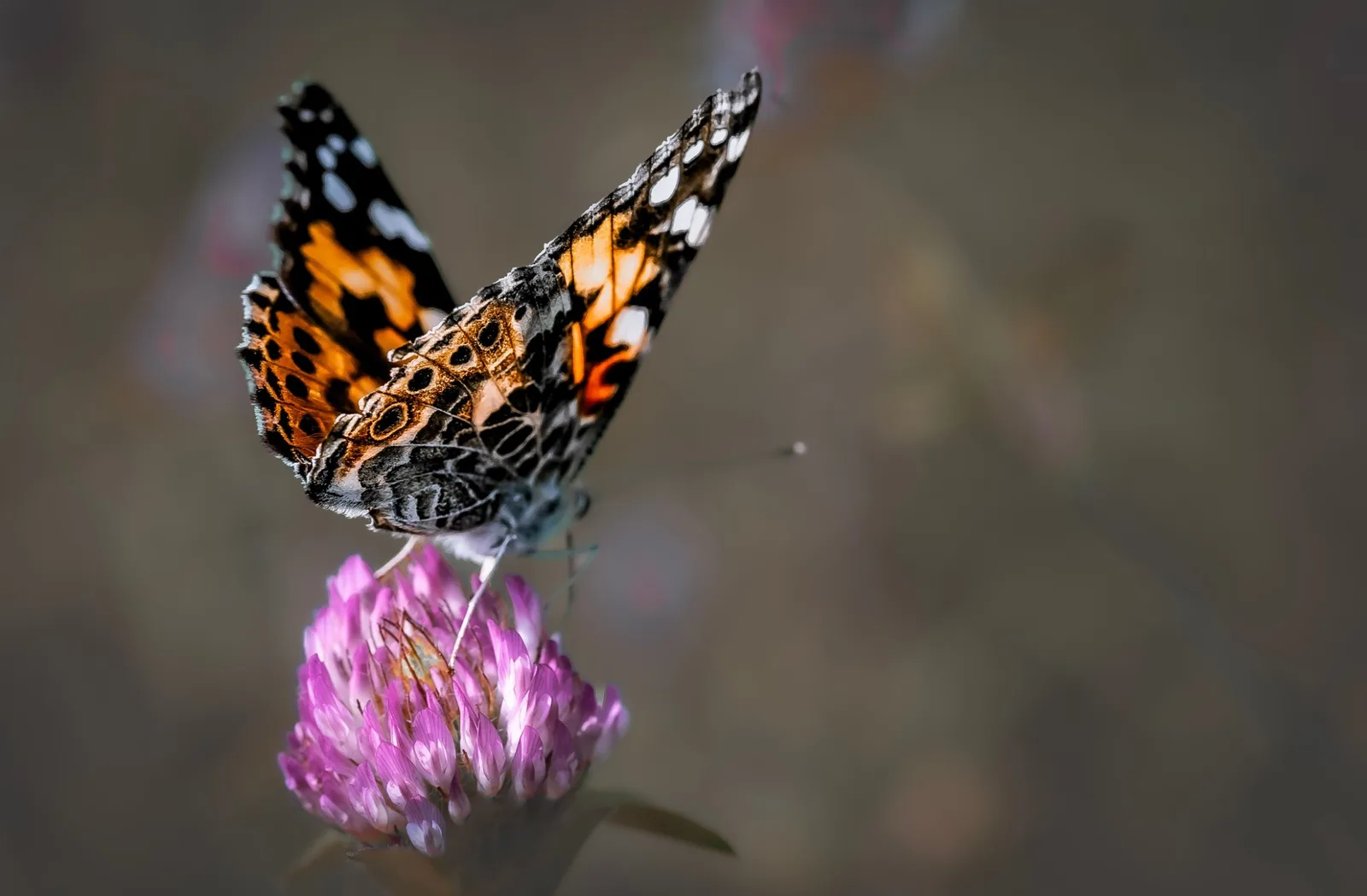
These butterflies fly thousands of kilometers without a compass or a map — and they do not lose their way. Try finding your way over 10–15 kilometers without a navigation app on your phone, and consider how difficult that would be. Butterflies make a journey that would be impossible for us with confidence, with knowledge renewed in every generation, and they succeed on the hardest routes. Unlike some migratory birds, they have no large feathered wings or powerful chest muscles to protect them from harsh weather. The challenge overcome by butterflies, so much smaller than any bird, is truly admirable.
The migration of butterflies shows us the perfection of their creation and the flawless plan that God has inspired in them. That these butterflies repeat their migratory journeys generation after generation and complete their routes without error is an example of God's flawless art of creation.
Source
- Carly Cassella, “Butterflies Can Make Epic Atlantic Ocean Voyages, Shocking Scientists,” ScienceAlert, July 6, 2024. sciencealert.com ↩