

Reading time: ~6 min read

The Discovery Channel recently broadcast a documentary called The Real Eve, in which imaginary scenarios were put forward regarding the spread of modern man, who allegedly emerged by means of evolution in Africa, to the rest of the world.
However, scientific discoveries show that the evolution of man is nothing but a fantasy, and that the claims made on The Discovery Channel are unfounded. This article reveals the scientific errors made by the channel.
The program begins with the claim that all human races in existence today are descended from one single woman who lived in Africa some 130,000 years ago, and that this woman was the first representative of Homo sapiens, who allegedly emerged through a process of evolution. Since these claims concerning this woman are based on analyses of mitochondrial DNA, this mythical female is known as "mitochondrial Eve."
It is suggested that these human beings, with their large brains, left the continent, maybe to find new resources, and began spreading to the rest of the world some 80,000 years ago. The likely migration routes of one small group of humans, shown wearing primitive clothing, and the incidents that may have taken place during their journey, are depicted. Such issues as climate changes, the relationship between Neanderthals and modern man, and a number of fossil discoveries are also discussed. The Darwinist message is that every person alive today is the product of evolution, and that the traces of this so-called evolution are to be found in our genes.
Yet the genetic facts said to confirm these claims are not actually objective scientific discoveries at all, but rather facts interpreted in the light of evolutionist prejudices. In other words, such interpretations of genes have no realistic basis.
The clearest example of this is the concept of "mitochondrial DNA" (mtDNA), used as the springboard for the evolutionist claims in the program. Mitochondrial DNA analyses always take pride of place in the claims put forward on the program. The allegations that Homo sapiens emerged some 130,000 years ago in Africa and that the first Americans came to the continent 20,000 years ago, as well as the speculation regarding the migration routes taken by human beings as they spread out of Africa, are all based on mtDNA.
The fact is, however, that age analyses based on mitochondrial DNA have recently been scientifically disproved!
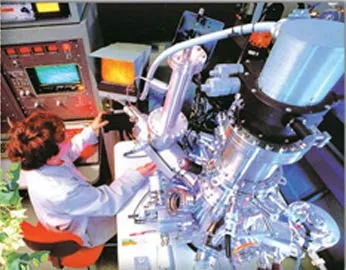
Until very recently, it was believed that mtDNA was passed on only by the mother, for which reason a woman's mtDNA could be followed down the generations. Evolutionary biologists frequently resorted to mtDNA analyses and used mtDNA to put forward speculation about the origin of life. Yet due to their attachment to evolution as a dogma they interpreted mtDNA in a one-sided manner, and imposed the precondition that the differences between the various examples of mtDNA they examined had to have come about by mutation.
However, a fact that emerged only last year has fundamentally undermined the credibility of these analyses. An article entitled "Mitochondria can be inherited from both parents" in the well-known magazine New Scientist described how 90% of the mitochondria in one Danish patient had been passed down from the individual's father. It thus emerged that all the mtDNA research employed to support imaginary evolutionary scenarios was actually meaningless. New Scientist confessed this fact in these words:
Evolutionary biologists often date the divergence of species by the differences in genetic sequences in mitochondrial DNA. Even if paternal DNA is inherited very rarely, it could invalidate many of their findings.1
For this reason, the "mitochondrial Eve" thesis put forward on The Discovery Channel has been totally invalidated by the above finding. Evolutionist sources such as The Discovery Channel interpret the genetic differences among the peoples of the world in the light of their own prejudices to reinforce their own theories. That is what invalidates the evolutionist claims based on genetic analyses.
Another research technique pointed to by evolutionists as supporting their "out of Africa" theories is Y-chromosome analysis, based on the study of the Y-chromosome, which can only be passed on by the father. Yet when Y-chromosome and mtDNA analyses are compared, the inconsistency of the evolutionist claims becomes even more obvious. Furthermore, a great many paleontologists fiercely oppose chronologies based on genetic analysis. The paleontological evidence is completely at odds with mtDNA and Y-chromosome analyses.
The researcher Spencer Wells, who studied the differences between the various human races using Y-chromosome analysis, suggests that all human beings are descended from a common ancestor living in Africa some 60,000 years ago. Paleontologist s basing their figures on the fossil record claim this happened some 40,000 years earlier. There is obviously an enormous difference between the dates proposed by genetic analysis and the fossil record. Alison Brooks, a paleontologist at George Washington University, says, "The dates don't compare well to the order or the geography of the migration patterns revealed by the fossil record."2 The difference between Y-chromosome and mtDNA analyses is even greater. Research based on the latter puts this departure back by 90,000 years, to 150,000 years ago.
It can be seen that evolutionists cannot even agree among themselves about the "out of Africa" theories discussed on The Discovery Channel. In fact, many evolutionist anthropologists and paleontologists completely oppose the "out of Africa" theory. One group of scientists led by such researchers as Alan Thorne and Milford Wolpoff defend the multi-region theory and put forward discoveries showing that the "mitochondrial Eve" thesis is a work of fantasy. The 68,000-year-old Mungo Man discovered in Australia by Alan Thorne has dealt a serious blow to the "out of Africa" theories, and of course to the "mitochondrial Eve" thesis.3
The reason why there are so many mutually conflicting theses is that the suggested process of evolutionary change is totally imaginary and unreal. Since there was no evolutionary process in the past, everyone comes up with his own individual scenario.
References
- Danny Penman, NewScientist.com, "Mitochondria can be inherited from both parents," August 23, 2002, http://www.newscientist.com/news/news.jsp?id=ns99992716 ↩
- Hillary Mayell, National Geographic News, "Journey Redraws Human's Family Tree" December 13, 2002 http://news.nationalgeographic.com/news/2002/12/1212_021213_journeyofman.html ↩
- Janine MacDonald, "Mungo Man older than thought," http://cogweb.ucla.edu/EP/Mungo_Man.html ↩