

Reading time: ~4 min read
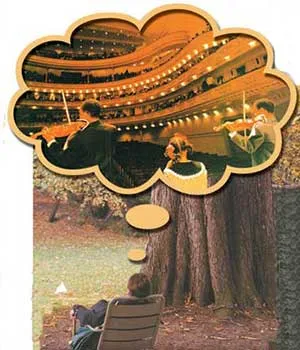
Although an important scientific truth is expressed in the BBC documentary, that truth is not emphasized in the way it should be. The documentary says: "Our eyes are only a window. It is our brain which sees around us. The eye merely forms the first stage."
This phrase, which one encounters in biology textbooks beginning in middle school, is actually very important, containing as it does a secret which can entirely alter a person's way of looking at the world.
People imagine they see the world with their eyes. The fact is, however, that the eyes and the cells which comprise them are merely responsible for turning the light reaching them from the outside, via chemical processes, into electrical signals. These electrical signals later arrive at the visual center at the back of the brain, which is where the image we see takes shape. For instance, someone reading these lines at this moment sees them in the visual center in the back of his brain. In other words, it is not actually the eyes that see. So, who is it that sees the image in the visual center and reads these words? Who is it that watches with excitement, joy, or sorrow the bright, colorful, three-dimensional image which forms within the darkness of the brain?
The same question also applies to the senses of hearing, taste, smell, and touch. Even as one listens to one's favorite song, it is not one's ears that are doing the hearing. Their task is merely to collect sound waves. The cells in the ears turn the sound waves reaching them into electrical signals, and forward them to the hearing center in the brain. That favorite song is then heard there. You hear the voice of your best friend in your brain. But who is it that hears these sounds within the dark confines of the brain, enjoying the melody and rhythm?
The answer to these questions shows that every thinking human being possesses a soul. Another important point revealed by this scientific fact is this: Everything we see, hear, and touch throughout our lives is perceived in our brains. In other words, we can never actually see or touch the originals of things. What we are always in contact with is perceptions in the brain, and it is impossible ever to have direct experience of these objects by means of these perceptions. For that reason, everyone, even in a crowded room, is actually watching the perceptions in his brain, and is essentially alone.

We may consider our dreams in order to arrive at a better understanding of this. Someone who dreams of attending a lecture in a packed hall is actually lying in bed alone. The image of the lecture forms within his brain. It is impossible for that person to realize he is dreaming until he wakes up, and he remains convinced that he is attending a real lecture.
The German psychiatry professor Hoimar von Ditfurth explains how we can never see the outside world:
No matter how we put the argument, the result doesn't change. What stands before us in full shape and what our eyes view is not the "world." It is only its image, a resemblance, a projection whose association with the original is open to discussion.6
Someone who exercises his mind a little will grasp this concept, which reveals the true nature of the life of this world and helps one realize just how hollow and meaningless the passions and desires aimed at this world truly are. The money in someone's wallet, the yacht he buys for millions of dollars, his holding company, and his new model car are all images which form within his brain. That individual can never touch or see the originals of these. All he perceives is images forming at the back of his brain. This is a scientific fact. The responsibility of all people of reason and good conscience is to grasp this concept before "waking from sleep," in other words before dying, and not to be deceived by becoming caught up in the life of this world.
References
- - Hoimar von Ditfurth, Der Geist Fiel Nicht Vom Himmel (The Spirit Did Not Fall From The Sky), p. 256 ↩