

Reading time: ~3 min read
Right at the beginning of the film there is talk of chimpanzees' being a "brother species" to man and it was said that scientists realized the similarities between the two species before their genetic proximity was confirmed.
National Geographic TV's view of monkeys as a "brother species" to man is nothing more than Darwinist prejudice and rests on no scientific findings. There is absolutely no evidence to support the claim that man and apes evolved from a common ancestor. In the face of the picture presented by the fossil record, evolutionist paleontologists admit that they have abandoned hope of finding a missing link between man and the chimpanzee.
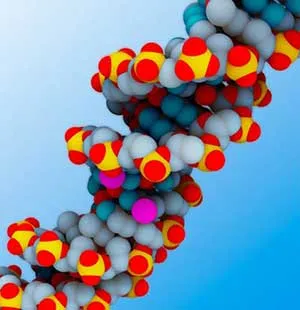
The claim that a "genetic proximity" between man and ape has been confirmed is a deception, pure and simple. Genetic proximity is a scenario produced as the result of a distortion of data regarding human and chimpanzee DNA with the aim of supporting Darwinism. However, this scenario is rotten to the core, because it claims that DNA emerged by means of so-called random evolutionary mutations. The fact is, however, that the effects of mutations on organisms are inevitably harmful, and may even have fatal results. DNA contains meaningful information recorded in a special encoding system. Random mutations in genes cannot possibly add new information to the DNA of the organism and turn it into a new species. All experiments and observations on mutations demonstrate this.
Moreover, the invalidity of the figures put forward in this genetic proximity propaganda has also emerged in new scientific discoveries in recent months. The findings of a California Institute of Technology geneticist have revealed that the genetic difference between man and chimpanzee was three times greater than had been claimed.1It was revealed that there is absolutely no scientific proof of a point that is so frequently stressed in evolutionist propaganda.
The National Geographic TV documentary, "My Favorite Monkey," states that man and apes possess a similar physiology, and this is portrayed as evidence of evolution. Space is devoted to the comments of a veterinarian regarding a monkey which was brought to him for treatment. The veterinarian states that some of the medicines he used for the monkey were actually human medicines, and cites this as evidence that the two species are related.
The fact, however, that medicines can prove to be effective in both species provides no evidence for the theory of evolution whatsoever. The comparison is merely one made in line with Darwinist prejudices. It is quite natural that similar chemicals should benefit both man and apes. Both species share the same biosphere and the same carbon-based organic molecules. This common structure applies not just to man and apes, but to the whole of nature. For instance, human beings produce medicine from the blood of the horseshoe crab. Yet this does not mean that man and the horseshoe crab are related. On the other hand, kidney transplants carried out from chimpanzees to human beings represent a serious blow to the claims of similar physiology. Dr. Keith Reemtsma of Tulane University carried out more than a dozen such transplants from chimpanzees to human beings in 1963, but all the patients died.2 That is because the chimpanzee metabolism worked faster, for which reason the cells in the tissue of the chimpanzee kidney rapidly consumed the water in the bodies of the human recipients.